
By Harrison Lowell, Guest Author
Dr. Killigan's exists because of a Saturday morning and a kitchen full of moth larvae. The exterminator's answer was a trap that only partly worked — and that looked like something you'd want to hide. So the founder built his own: a stronger pheromone lure, in a trap designed to be seen rather than hidden. That was more than a decade ago, and every product since has been held to the same standard: it has to work, and it has to look like it belongs.
That's the trap this post is about. Here's how it stacks up against what's on the market now.
At a glance
| Pantry Moth Trap (Dr. Killigan's) | Trap a Pest 20-pack | Catchmaster Pantry Moth Traps XL 6-pack | |
|---|---|---|---|
| Price | $39.97 / 20 traps ($2.00/trap) | $22.88 / 20 traps ($1.14/trap) | $16.49 / 6 traps ($2.75/trap) |
| Mechanism | Double-potent pheromone + glue | Pheromone + glue | Extra-strength pheromone + glue |
| Rating | 4.7★ | 4.3★ | 4.3★ |
| Press mentions | Bob Vila ("Best for Pantries"), Homes & Gardens | — | — |
Prices and ratings were checked in September 2026 on our own product page and, for the competitors, at a major retailer. Our own price is list price and may be lower during a sale — check the current listing.
Why "double-potent" isn't just a marketing word
Most pantry moth traps on the market — Trap a Pest, MaxGuard, RESCUE!, Safer Brand, generic Amazon multi-packs — use a standard pheromone lure on a glue board. A few sell a stronger version; Catchmaster's XL line is marketed as extra-strength. So the question isn't whether anyone else has thought of a stronger lure. It's how much stronger, and what it was built to solve. The trap the exterminator recommended, back when the founder's own kitchen was infested, used a standard lure, and it failed because it wasn't potent enough to reliably draw male moths in before they could find a female and reproduce. Dr. Killigan's formula was built specifically to fix that gap — a proprietary pheromone concentration that Dr. Killigan's has evaluated at twice the catch rates of other traps.
That concentration is why Dr. Killigan's trap ended up outside the home. Museums — the Smithsonian among them — along with professional pest control companies, rug manufacturers, clothing retailers and feed stores use it, where a missed infestation means a ruined collection or a contaminated warehouse rather than one kitchen cupboard.
The honest trade-off
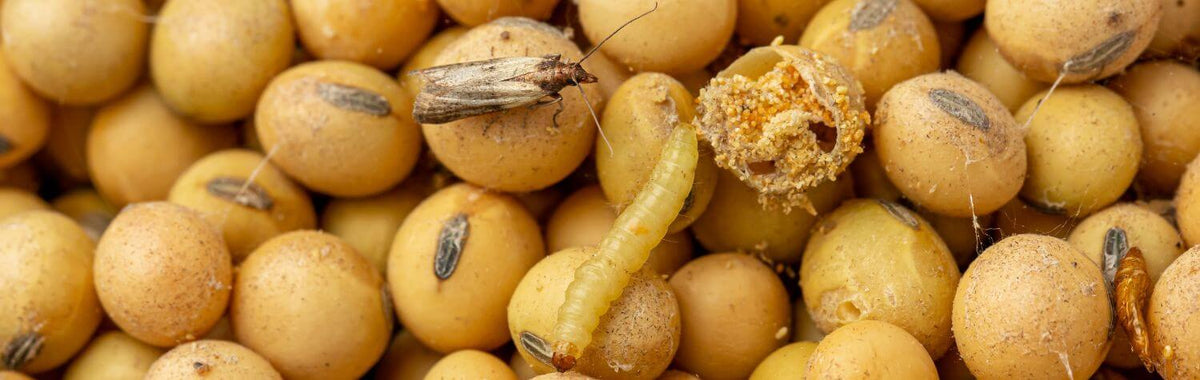
A pheromone trap catches adult males. That's true of ours as much as anyone's: it doesn't touch the eggs or larvae already inside a bag of flour or a box of cereal — those have to be found and thrown out. Traps break the breeding cycle and tell you whether you still have a problem; no trap cleans out an infestation that's already in the food.
Price, honestly
Trap a Pest's 20-pack is the one true like-for-like against ours: $1.14 per trap versus our $2.00, about 43% less. Catchmaster only sells the XL in a 6-pack, and against our own 6-pack we're the pricier of the two there as well. There's no pack size where we come out as the cheap choice. What the difference buys is a stronger lure and a 100% satisfaction guarantee. If the lowest price per trap is the deciding factor, Trap a Pest is the honest answer.
Why trust Dr. Killigan's: Dr. Killigan's is a pioneer in minimum-risk pest control, formulating plant-based solutions alongside a practicing entomologist. Every product is evaluated against the actual pest it's meant to kill before it ships. "Natural" isn't the finish line. Proven is.
FAQ
How do I get rid of pantry moths naturally?
A double-potent pheromone and glue trap removes adult males before they can reproduce. That's one part of the job — clearing an active infestation also means finding the source, discarding what's contaminated, and cleaning the shelves it sat on. For the complete process, see our step-by-step guide to getting rid of pantry moths.
What makes this trap different from the less expensive ones?
The mechanism is the same — a pheromone lure on a glue board. What differs is how much pheromone the lure carries, and that matters more than it sounds: the trap is competing with the real females in the room, so a stronger lure is the difference between a male finding the trap and finding her. That's what "double-potent" refers to.
Are pantry moth traps safe to use near food?
These are made to go in the pantry, on the shelf near the food the moths are after — that's where they work. Nothing is sprayed: the lure is a pheromone scent, and the moths are caught on an adhesive board.
How many traps do I need for a real infestation?
Three is a good starting point, spread out rather than clustered — one on the shelf beside the food that's infested, one on a different shelf in the same pantry, and one near another dry-food source, such as a separate cabinet. Placement does more work than quantity: traps need airflow around them, and competing scents nearby will pull moths away. For the full layout, see our guide to where to place moth traps.
Bottom line
If you just want any pheromone trap at the lowest price per unit, several honest competitors exist, and Trap a Pest is the cheapest of them. If you want the lure that museums and pest control companies rely on, this is it.
Related reading
- Clothing Moth Traps vs. Mothballs
- Best Smelling Cedar Blocks for Your Closet
- Best Fruit Fly Trap 2026
- How to Get Rid of Pantry Moths Naturally: What Works and What Doesn't
Featured in this article
Shop Dr. Killigan's Essentials

Pantry Moth Trap (20 Pack) - Double Potent Pheromone & Glue Formula - Protect Food & Kitchens

Clothing Moth Trap (6 Pack) - Double Potent Pheromone & Glue Formula - Protect Your Closet