

Published September 10, 2026
Reviewed by Julie Miller, BA in Language Arts, Editorial Lead, Dr. Killigan’s
TL;DR: Pantry moths can infest dry dog food just as readily as flour, cereal, grains and other stored foods. They may arrive inside a bag as eggs or larvae, or spread into dog food from another infested product nearby.
If you find webbing, larvae, clumped kibble or adult moths in or around your dog’s food, don’t serve food from that bag. Discard it, inspect nearby dry goods, clean the storage area thoroughly and move replacement food into a tightly sealed container.
And if your dog already ate some of the affected food? Do not panic. Pantry moths are not known to transmit human pathogens, so a few bites of infested kibble is usually not cause for alarm—the condition of the food matters more than the moths.
Premium Pantry Moth Traps help capture adult male pantry moths and interrupt the reproductive cycle. Dust to Dust® can provide longer-lasting control around the storage area when used as directed.
Signs of pantry moths in dog food
A pantry moth problem does not always begin with a moth fluttering around the kitchen.
Often, the first evidence is inside the food.

Check your dog’s kibble and its packaging for:
- Fine, silky webbing inside the bag or around pieces of food
- Kibble that appears unusually clumped together
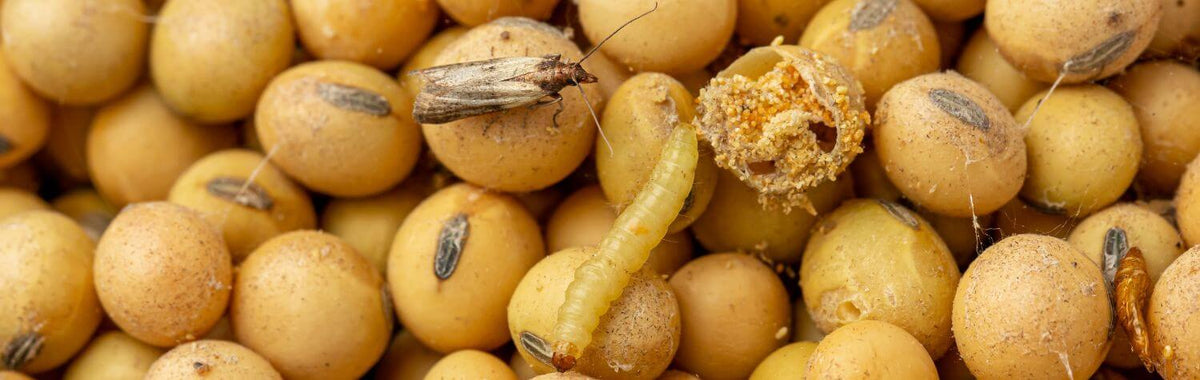
- Small cream-colored or whitish larvae
- Larvae crawling along nearby walls, shelves or ceilings
- Small cocoons tucked into corners or package seams
- Adult moths flying near the food-storage area
Indian meal moth larvae and other pantry moth larvae leave behind webbing, waste and shed material, which contaminates the food as an infestation develops.
Pantry moths can feed on far more than pet food. See What do pantry moths eat? At-risk pantry foods to check for a fuller list of foods worth inspecting.
Why are there moths in dog food?
Dry dog food can offer pantry moth larvae exactly what they need: a protected place with a dependable food supply. Many dry formulas contain grains, plant ingredients or other nutrient-rich materials that stored-product pests can feed on.
Tip: Large bags of kibble may sit for weeks, giving an unnoticed pantry moth infestation more time to develop.
The moths may have reached the food in one of two ways.
They arrived with the food
Pantry moth eggs are tiny and easy to miss. A product can become infested during production, storage, transport or retail, before it ever reaches your home.
Even a bag that appears sealed should not automatically be ruled out. Eggs or larvae may already be present inside and pantry pests can also exploit tiny openings or vulnerable packaging.
They spread from another stored product
The dog food may not be the original source. Birdseed, grains or another dry product stored nearby can support an infestation that later spreads into the dog food.
Is it safe if my dog ate food with moths in it?
Finding pantry moth larvae in the bowl after your dog has already eaten is understandably unsettling.

The moths themselves are not the main concern. Pantry moths are stored-food pests rather than disease carriers — Cornell notes they are not known to transmit human pathogens. What matters is the condition of the food they were living in: their presence does not tell you whether the kibble is still fresh, and spoiled or moldy food can make a dog sick.
If your dog has already eaten from an infested bag:
- Check the bag for an unusual or rancid odor, discoloration, mold or changes in texture.
- Keep the original packaging or lot information in case your veterinarian needs it.
- Watch your dog for vomiting, diarrhea, loss of appetite, unusual tiredness or other changes.
- Contact your veterinarian promptly if symptoms develop or you are concerned about the condition of the food.
What about pantry moths in cat food and other dry pet food?
Pantry moths can also infest dry cat food, pet treats and other stored animal foods, and the University of Maryland Extension specifically lists dry pet food among the products Indian meal moths may attack.
If you find pantry moths in cat food or another dry pet food, use the same cleanup and storage process outlined below for dog food.
How to get rid of pantry moths in dog food
Once you know what you are dealing with, work methodically. The goal is not simply to catch the moth you can see. It is to remove the food supporting the infestation and interrupt the next generation.
1. Toss the infested dog food
If you find larvae, webbing, clumps or other clear evidence of infestation, discard the food.
Do not pick out the visible insects and keep feeding from the same bag. Eggs and young larvae may be much harder to see.
Seal the infested food in a bag or container, then place it in an outdoor garbage can so moths or larvae do not escape back into the home.

2. Inspect everything stored nearby
Check neighboring packages, especially opened products, damaged packaging and items that have been sitting undisturbed for a long time.
Then sort what you find:
- Visible signs — larvae, webbing, shed material or damage: discard it. Freezing stops insect development, but it does not remove contamination already mixed into the food.
- No visible damage but possible exposure: freeze items worth keeping at 0°F for at least seven days in an airtight container, then transfer the contents to a clean container with a tight-fitting lid.
- Sealed, intact containers: wipe the outside, check the lid and rim, and keep them separate while you clean.
Freezing suits pantry staples — flour, grains, nuts, seeds, birdseed. A large bag of kibble is rarely practical to freeze, which is why step 1 is disposal.
3. Vacuum and clean the storage area
Remove everything from the shelf, cabinet or storage bin.
Vacuum loose food, webbing and debris, paying close attention to:
- Shelf corners
- Cracks and crevices
- Peg holes
- The undersides of shelves
- Cabinet joints
- Floor and wall edges around large food bins
Then wipe down the storage area with a simple water-and-vinegar solution and allow it to dry.
Once dry, lightly spritz the shelves with Six Feet Under®, then allow the treated area to dry before returning pet food or storage containers.
4. Add pantry moth traps

Once you've removed the source and cleaned the area, use Pantry Moth Traps.
The traps use a pheromone lure to attract and capture adult male pantry moths, helping interrupt the reproductive cycle. Their proprietary Blue Stripe Formula delivers twice the catch rate of typical pantry moth traps, while also giving you a simple way to monitor ongoing activity.
Once opened, the traps remain effective for about three months. Replace them sooner if they become full.
Tip: Pantry moth traps target adult males, not eggs, larvae or pupae.
5. Treat cracks and crevices
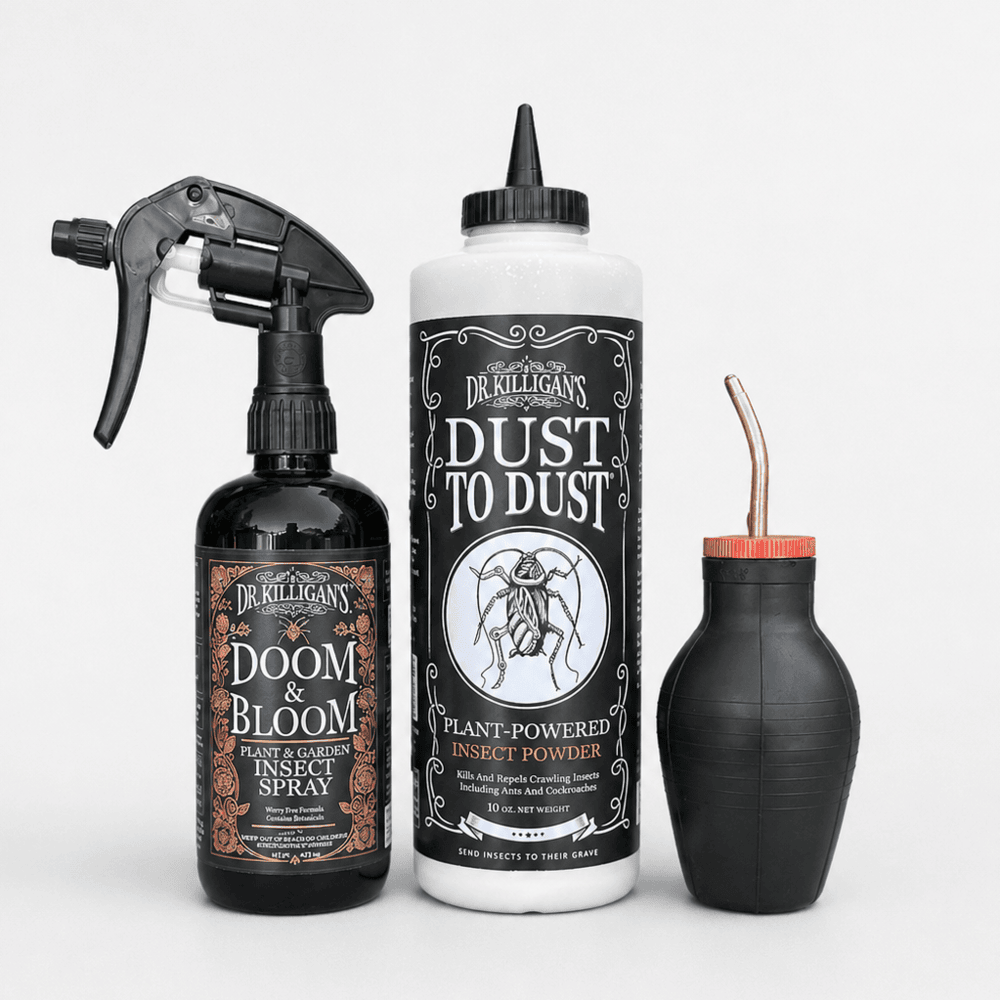
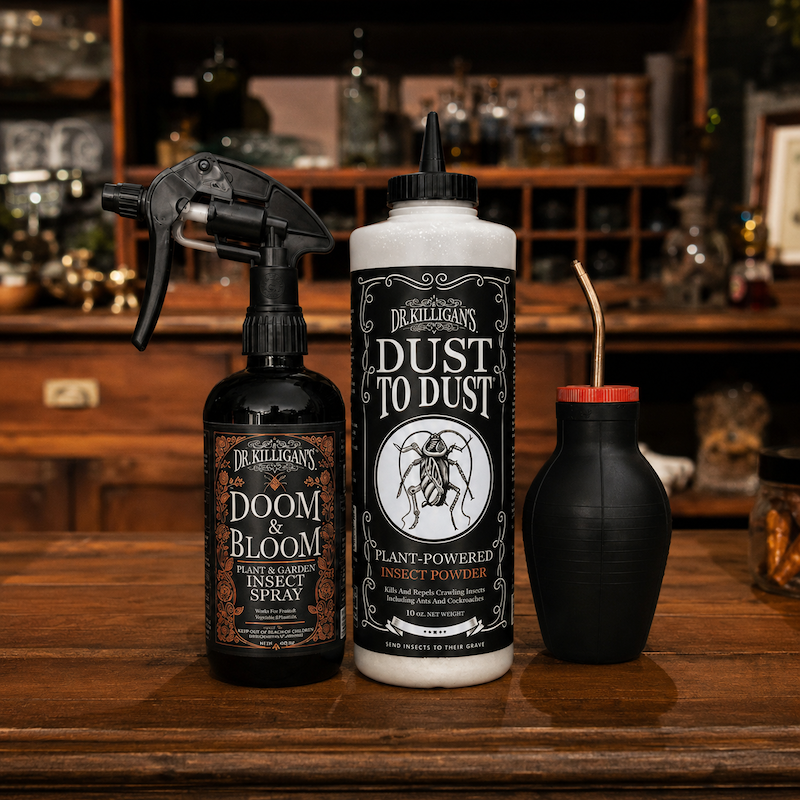
For additional control around the storage area, Dust to Dust can be applied to cracks, crevices and perimeter areas around the storage space.
Do not apply directly to kibble, pet bowls or food-contact surfaces. Keep pets away during application and follow the product label directions.
For the complete pantry moth control lineup for pet-food storage areas, see How to get rid of pantry moths in dog food.
Featured in this article
Shop Dr. Killigan's Essentials

Pantry Moth Trap (6 Pack) - Double Potent Pheromone & Glue Formula - Protect Food & Kitchens

Dust to Dust: Dual-Action Kills & Repels - Plant-Powered Insect Powder (10 oz)
How to keep bugs out of dog food
After an infestation, storage becomes part of pest control.
Use a tightly sealed container

Move replacement dog food into a durable container with a tight-fitting lid. Glass, metal or sturdy plastic containers offer better protection than thin bags or cardboard.
Tip: A secure container helps keep pantry moths out and can also help contain an infestation if eggs or larvae were already present in the food.
Clean between bags
Do not continually pour fresh kibble over crumbs and residue from the previous bag. Empty and clean the storage container before refilling it, then allow it to dry completely. The same principle applies to measuring cups, scoops and the shelf beneath the container.
Buy a quantity you can use reasonably quickly
A giant bag may look economical, but long storage gives unnoticed pest activity more time to develop. Choose a size appropriate for your household and follow the pet-food manufacturer’s storage guidance.
Keep the storage area clean and dry
Sweep up spilled kibble promptly. Vacuum around shelving and bins. Inspect less-visible corners from time to time. If dog food lives in the garage, utility room or another less-frequented space, make that inspection deliberate.
Keep monitoring after the obvious infestation is gone
Seeing fewer moths is encouraging, but it does not necessarily mean every life stage is gone. Continue checking stored food and monitoring traps while any eggs, larvae or pupae already present have time to develop.
For a fuller look at why an infestation can seem to disappear and then return, read Why pantry moths keep coming back and how to prevent them.
Explore more
-
Why pantry moths keep coming back and how to prevent them
Learn why seeing the last adult moth does not necessarily mean the infestation is finished—and what helps prevent another generation. -
Pantry moth eggs: What they look like and what to do
Learn how to tell contaminated food from merely exposed food, and which items are worth freezing instead of throwing out. -
What do pantry moths eat? At-risk pantry foods to check
See which dry foods are most likely to support an infestation so you can inspect beyond the pet-food bin. -
Pantry moth life cycle: Eggs, larvae, pupae and adults
Follow the pantry moth from egg to adult and learn why controlling more than one stage matters.