
By Harrison Lowell, Guest Author
Cedar planks are one of the easiest closet fixes to buy and one of the easiest to forget about. They work well for months, then quietly stop — not because the wood wore out, but because the oil at its surface did. Here's how Dr. Killigan's Cedar Planks compare with two popular cedar packs on Amazon, and what it takes to keep any of them working.
At a glance
| Cedar Planks (Dr. Killigan's) | HOUNDSBAY 36-pack | ACMETOP 15-pack | |
|---|---|---|---|
| Price | $24.97 / 10 planks ($2.50/plank) | $19.97 / 36 blocks ($0.55/block) | $18.99 / 15 blocks ($1.27/block) |
| Format | 10 sustainably sourced planks, hangers included | 36 cedar blocks | 15 cedar blocks |
| Repellent ingredient | Cedarwood oil, from Eastern red cedar | Cedarwood oil, from eastern red cedar | Cedarwood oil, from "aromatic red cedar" (species not named) |
| Refresh | Cedar Ward spray or light sanding | Sanding (per listing) | Sanding (per listing) |
| Rating | 4.9★ | 4.1★ | 4.2★ |
Prices and ratings were checked in October 2026 — ours on drkilligans.com, HOUNDSBAY's and ACMETOP's on Amazon, where the HOUNDSBAY 36-pack carries 4.1★ across 2,322 ratings and the ACMETOP 15-pack carries 4.2★ across 3,579. Our own price is list price and may be lower during a sale — check the current listing.
What keeps cedar working
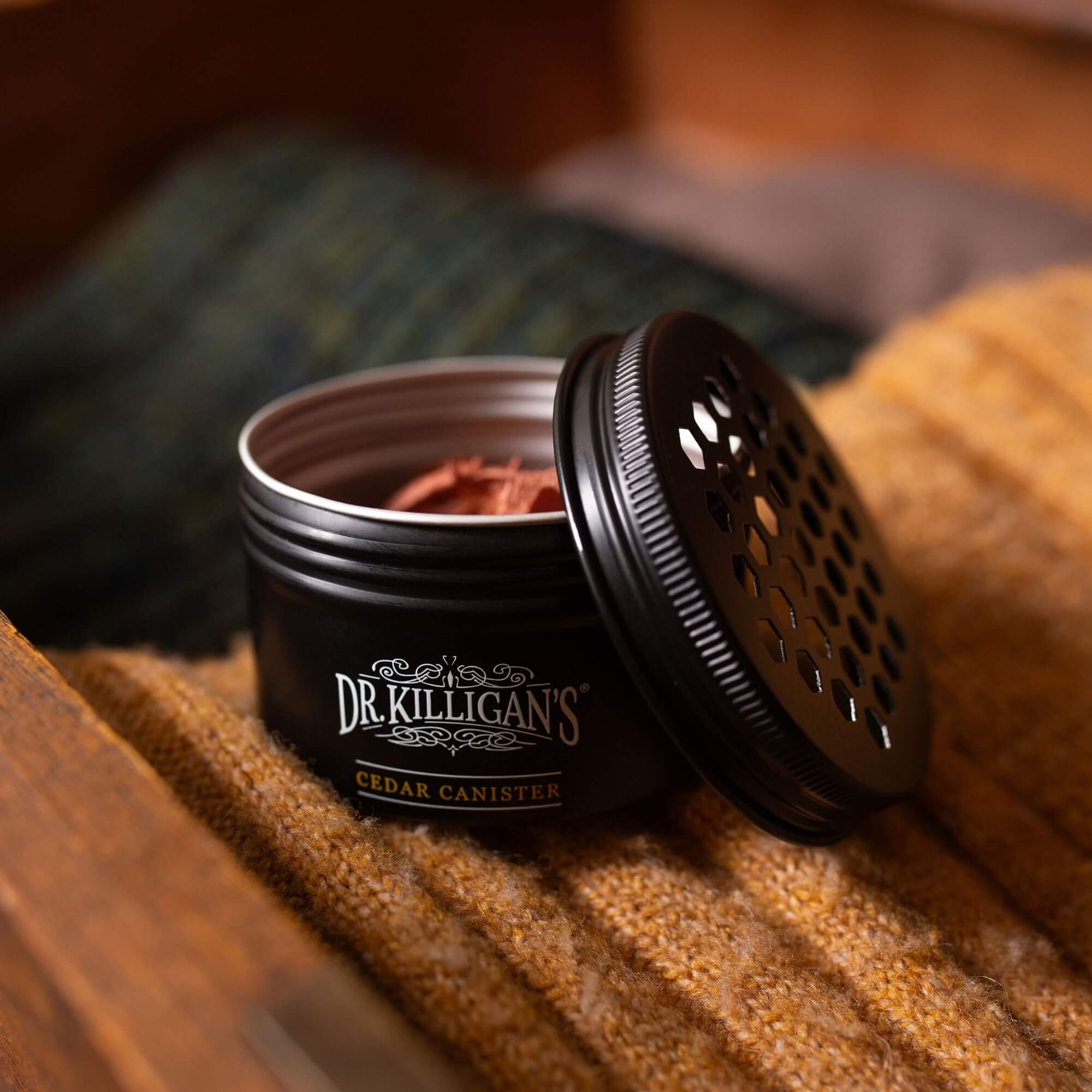
All three are real red cedar, and all three repel moths the same way: through the cedarwood oil in the wood. That oil evaporates from the surface over time, taking the scent and the repellency with it. HOUNDSBAY's and ACMETOP's listings both tell you to sand the wood to bring it back, scraping away the dried surface to reach fresh oil underneath. Dr. Killigan’s planks give you two options: sand them the same way, or pair them with Cedar Ward, a cedarwood oil spray that puts oil back instead of scraping wood away and extends the planks’ potency up to 10 times longer.
The honest trade-off
Fewer pieces is the trade. A box of 10 planks, spaced about 6 inches apart, covers about 5 feet of hanging space, while HOUNDSBAY’s 36 blocks spread across more spots, from drawers to shoe racks. But each of our planks is a larger piece of wood, hung right on the rod beside the wool and cashmere moths go after, with enough wood to sand back to fresh oil again and again. Fewer pieces, but more cedar where your clothes hang, and a second box covers a larger closet.
Price, honestly
HOUNDSBAY works out to $0.55 a block and ACMETOP to $1.27, against our $2.50 a plank. If the lowest price per piece is the deciding factor, HOUNDSBAY is the honest answer. But a block isn’t a plank: piece for piece, ours carry about twice the cedar of a HOUNDSBAY block. What the difference buys is cedar in planks worth keeping.
Why trust Dr. Killigan's: Dr. Killigan's is a pioneer in minimum-risk pest control, formulating plant-based solutions alongside a practicing entomologist. Every product is evaluated against the actual pest it's meant to kill or repel before it ships. "Natural" isn't the finish line. Proven is.
FAQ
Do cedar planks actually repel clothes moths?
Yes. The cedarwood oil in the wood repels webbing and case-making clothes moths, protecting wool, fur, leather and other keratin-rich materials for up to 6 months.
What's the difference between cedar planks and cedar blocks?
Mostly shape. Planks are longer and flatter, so they lie flat in a drawer or hang from a rod; blocks are smaller and thicker. Both work the same way.
How do I know when cedar needs refreshing?
When you can no longer smell it up close — that’s your cue to spray or sand.
Bottom line
Of the three, Dr. Killigan’s planks are the only ones you can sand or spray back to life — and they’re backed by our 100% satisfaction guarantee. HOUNDSBAY’s blocks cost less per piece, but if you want cedar that keeps working with the least effort, these are the planks to buy.
Related reading
- Best Smelling Cedar Blocks for Your Closet: What Keeps Cedar Working
- Clothing Moth Traps vs. Mothballs
- Pantry Moth Traps Compared: What Lure Strength Actually Changes
Featured in this article
Shop Dr. Killigan's Essentials

Cedar Planks (10 Pack) - Premium Clothing Moth Repellent – 100% Natural Protection

Cedar Ward - Rejuvenating Spray - Premium Cedar Oil - Restore The Natural Preventative Properties of Cedarwood (4 oz)