
By Harrison Lowell, Guest Author
If you've looked into DIY whole-home pest barriers, you've probably run into Pestie—the subscription pest-control kit that mails you a custom-mixed concentrate every quarter. It's a real, well-reviewed competitor with more than 30,000 reviews, and the closest comparison to Barricade on price and cadence. Where the two part company is what's in the bottle: Pestie's home kit is built on EPA-registered synthetic pyrethroids, Barricade on plant-derived actives that are exempt from registration.
At a glance
| Six Feet Under Barricade (Dr. Killigan's) | Pestie | Ortho Home Defense Perimeter | |
|---|---|---|---|
| Price | $45.97 one-time / $34.48–$41.37 per treatment, $137.91–$165.48/year subscribed | $55 one-time / $35–$45 per treatment, $140–$180/year subscribed | $7.48–$34.99 one-time, depending on size |
| Formula | Plant-derived actives — soybean oil 66.6%, sodium lauryl sulfate 3.2%, peppermint oil 5.3%; biodegradable, exempt from EPA registration under FIFRA 25(b). | Synthetic — esfenvalerate 6.40%, prallethrin 1.60%, piperonyl butoxide 8.00% (EPA Reg. No. 100947-2). Formulas vary by region. | Synthetic — bifenthrin 0.05%, zeta-cypermethrin 0.0125% (EPA Reg. No. 239-2717). |
| Model | Buy once or subscribe — concentrate, sprayer and application bag; ships quarterly or all at once. | Buy once or subscribe — concentrate, sprayer (first shipment only), application bag, gloves and instructions; ships quarterly. | Buy once — ready-to-use bottle with included wand. |
| Claimed coverage | 50+ insects — 90-day protection, covers up to 4,500 sq ft per treatment (up to 7,500 sq ft with the 2-bottle kit). | 100+ species — up to 60-day protection, covers up to 4,500 sq ft per treatment (up to 7,500 sq ft with the XL plan). | Bug list not specified — up to 12 months indoors on non-porous surfaces; 3 months outdoors (6 for some spiders). |
| Guarantee | Money-back satisfaction guarantee. | Full refund if issues persist between treatments. | Not specified. |
| Rating | 4.9★ | 4.7★ | 4.4★ |
Prices and ratings were checked in August 2026 on each brand's own product page (drkilligans.com, pestie.com). Ortho does not sell direct, so its figures come from Home Depot — the 4.4★ is for the 1-gallon Comfort Wand size, across 18,837 reviews. Pestie's per-treatment prices were on sale when checked.
What's actually different here
Pestie is more similar to conventional pest control than it first appears. Its active ingredients, esfenvalerate and prallethrin, are synthetic pyrethroids, the same chemical class used in off-the-shelf products like Ortho (bifenthrin, zeta-cypermethrin), Spectracide (gamma-cyhalothrin), Talstar and Bifen (both bifenthrin). All are EPA-registered, and all work the same way: synthetic pyrethroids disrupt an insect's nervous system, which is why their labels carry the precautionary statements they do. Most are DIY rather than technician-applied and all rely on a repeat-treatment cadence to keep working.
The honest trade-off
Dr. Killigan's builds Barricade on naturally occurring, plant-based ingredients, and that choice has a cost worth naming: Barricade covers 50+ bug types where Pestie claims 100+, and the narrower list is the trade. The formula kills most bugs on contact, takes a few minutes longer on others, and leaves behind a residue that repels household insects from coming in.
Price, honestly
On pure annual cost, Barricade and Pestie's subscriptions run close to each other. Neither is the clear budget option over the other. Ortho is cheaper up front than either, but it's a ready-to-use bottle rather than a season of treatments — a different kind of purchase, not a cheaper version of the same one.
Why trust Dr. Killigan's: Dr. Killigan's is a pioneer in minimum-risk pest control. Barricade was formulated alongside a practicing entomologist, then evaluated against the actual pest it's meant to kill before it ships. "Natural" isn't the finish line. Proven is.
FAQ
Is Six Feet Under Barricade the same as Pestie?
No, but they're the closest match in this category — both are DIY, repeat-application barrier treatments priced similarly per year. The bigger difference is the buying model: Pestie ships a complete kit every quarter, while Barricade is a concentrate you buy and mix yourself.
Which one covers more pests?
Pestie claims more on paper. In practice both cover the household list most people actually need — ants, roaches, spiders, fleas, ticks — and the difference sits in the long tail.
Is either as strong as a professional-grade barrier like Talstar?
They're harder to compare than the marketing suggests. Talstar's label claims up to 3 months of residual control for fleas specifically, and about 1 month for house flies — the blanket "over three months" figure you'll see quoted is retailer copy, not label language. Pestie relies on the same synthetic pyrethroid class as Talstar. Barricade's own claim is 90-day protection — longer than Talstar's label claims for anything other than fleas.
Do I need a subscription for either one?
Neither locks you in. Pestie is subscription-first but sells a one-time kit; Barricade is one-time by default with a subscription option. The difference is which way the default points.
Bottom line
Strip the marketing away and only one comparison here is like-for-like: Barricade against Pestie. Ortho measures a different surface; Talstar measures a different insect. Between the two that genuinely compare, the chemistry is what's left to choose on.
Related reading
- Natural Alternatives to Raid That Actually Work
- Is There a Natural Wasp Spray That Works as Fast as Raid?
- Dust to Dust vs. Diatomaceous Earth: What's Actually Doing the Killing?
Featured in this article
Shop Dr. Killigan's Essentials

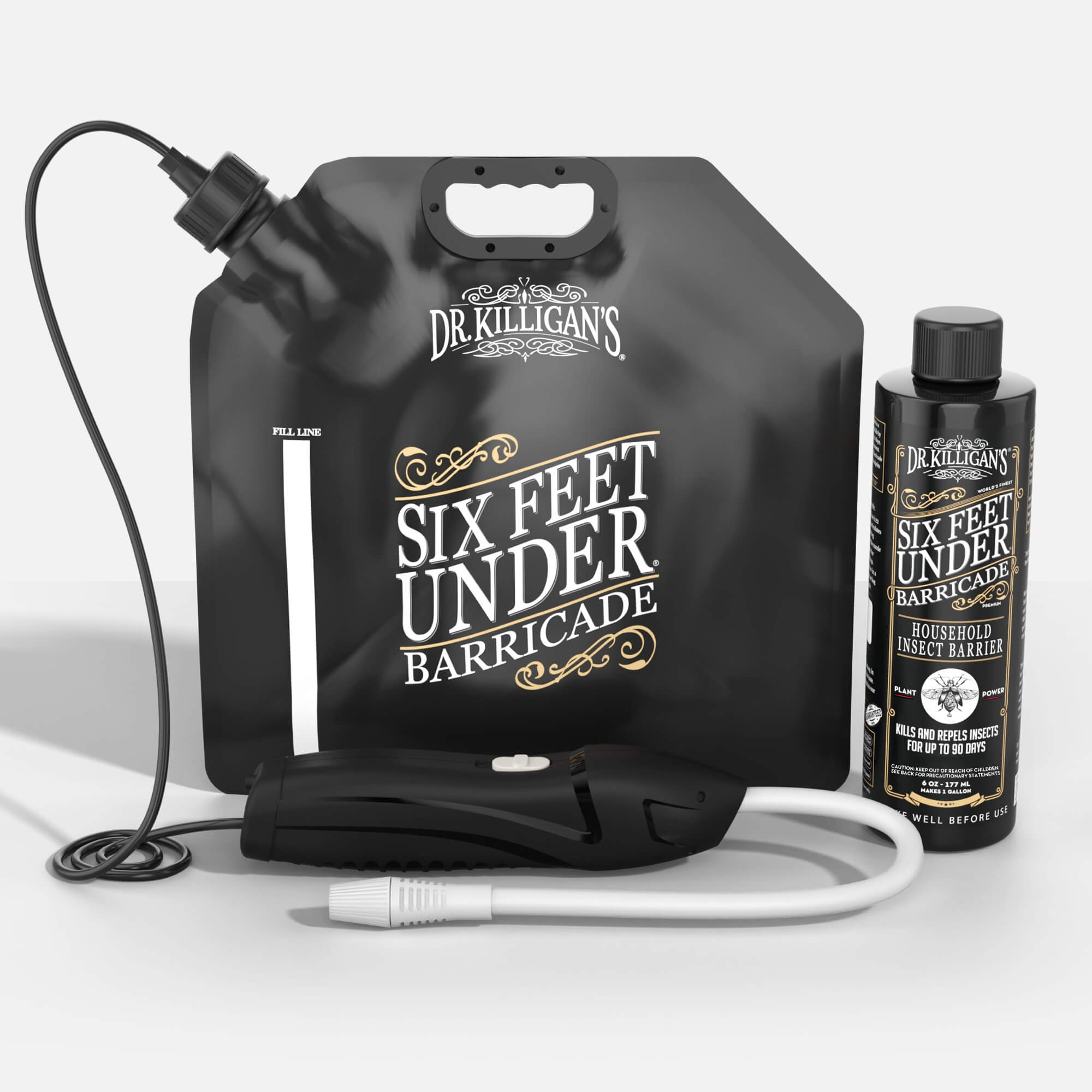
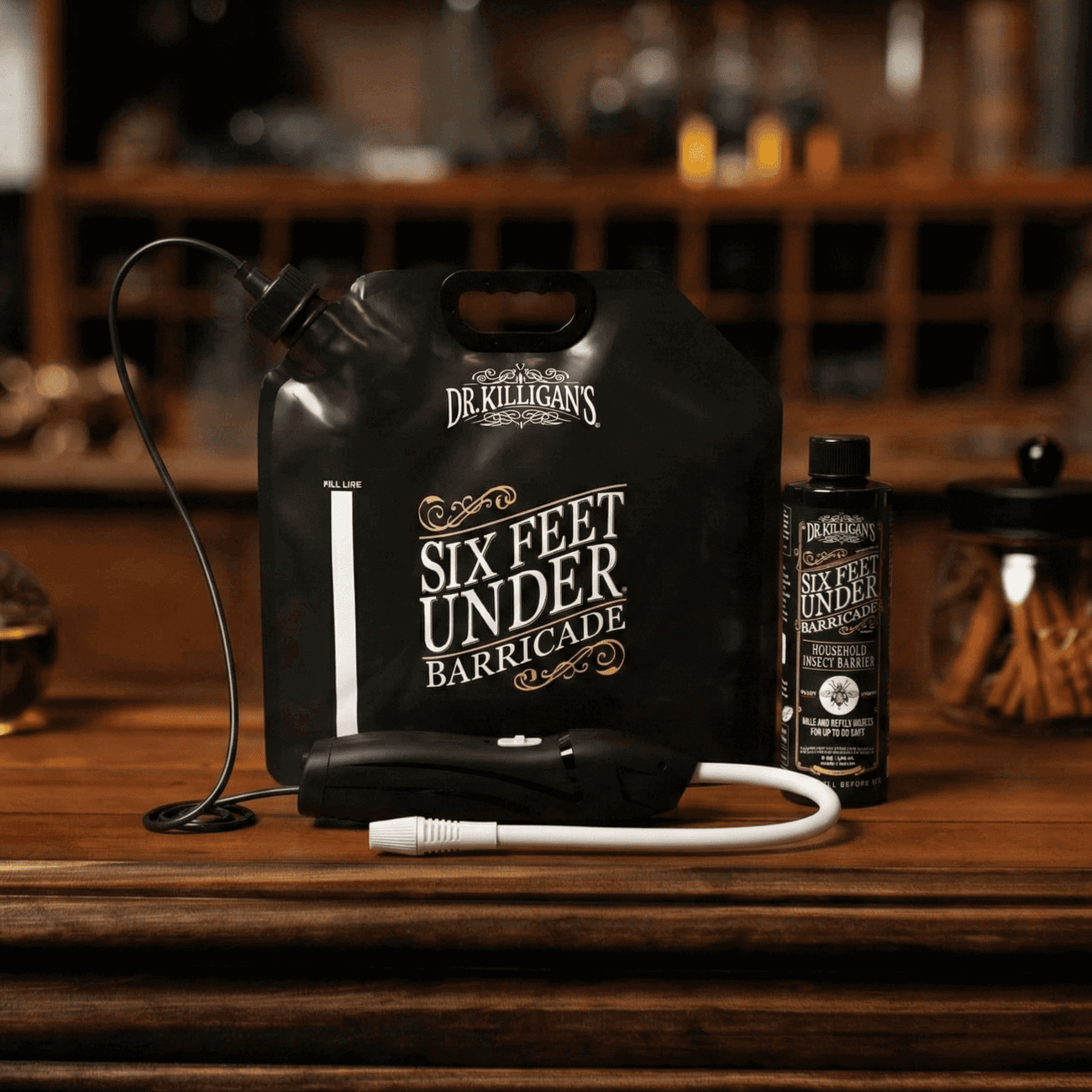
Six Feet Under: Barricade – 90-Day Whole Home Insect Killer & Barrier (DIY Pest Control Kit)

Six Feet Under: Indoor & Outdoor Insect Killer & Repellant - Fast-Acting (24 oz)