
By Sarah Whitman, Guest Author
TLDR: Silverfish thrive in humid bathrooms and undisturbed closets where paper, glue, and natural fibers provide food. Long-term prevention depends on lowering moisture, sealing entry points, reducing paper clutter, and using non-toxic powders and monitoring tools to quietly interrupt their life cycle.
Few household discoveries are as unsettling—and as oddly prehistoric—as spotting a silverfish dart across a bathroom floor. They move quickly, vanish into cracks, and seem to appear precisely when the lights switch on.
Yet silverfish are not a sign of neglect. They are moisture-loving scavengers drawn to humidity, paper, glue, and natural fibers. Bathrooms and closets—especially those with limited airflow—offer precisely what they need.
The good news is reassuring: silverfish are highly predictable. When their environment changes, they leave. Prevention is less about chemical warfare and more about calm, strategic adjustments that restore balance to the home.
Why Silverfish Appear in Bathrooms
Bathrooms provide three elements silverfish adore:
- Humidity from showers and baths
- Darkness behind baseboards and under cabinets
- Organic material such as paper products, glue, and even residue in forgotten corners
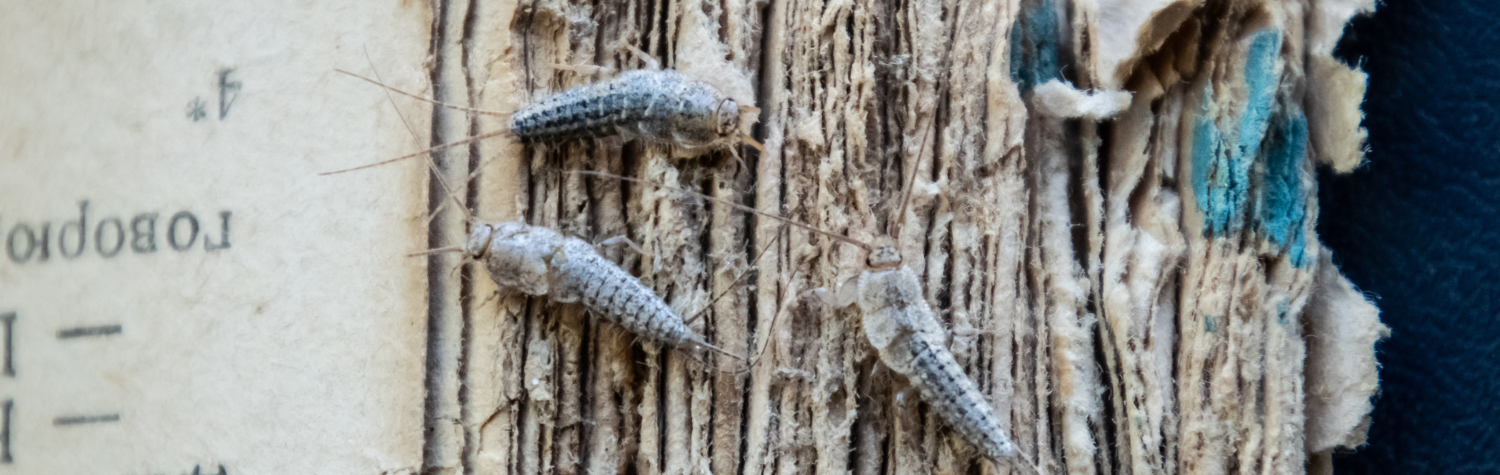
Silverfish feed on starches and carbohydrates found in book bindings, wallpaper paste, cardboard, and certain textiles. In bathrooms, this often means toilet paper packaging, stored magazines, cotton products, and even the adhesive beneath vinyl flooring.
They do not bite. They do not transmit disease. But they do nibble—and that is enough to concern any homeowner who values order.
Why Closets Become Silverfish Havens
Closets—especially those along exterior walls or near bathrooms—offer quiet, undisturbed shelter. Silverfish hide in:
- Cardboard shoe boxes
- Wallpaper seams
- Stacks of books or photo albums
- Undersides of shelf liners
- Baseboard gaps
They are particularly drawn to paper and glue. Family photo boxes, stored yearbooks, and decorative storage bins with paper labels can become feeding grounds if humidity remains elevated.
Understanding this preference is the key to preventing long-term activity.
The Root Cause: Moisture First, Food Second
Silverfish require humidity to survive. Most infestations begin when indoor moisture levels consistently rise above what is comfortable for humans.
Common contributors include:
- Poor bathroom ventilation
- Leaky plumbing under sinks
- Closets with little airflow
- Homes with high ambient humidity in summer months
Reduce moisture, and silverfish struggle to remain.
Step 1: Lower Humidity in Problem Areas
This is the most effective long-term strategy.
- Run bathroom exhaust fans during and after showers.
- Use a dehumidifier in humid climates.
- Repair plumbing leaks promptly.
- Avoid storing damp towels in enclosed closets.
A simple hygrometer can provide clarity. Bathrooms and closets ideally remain below consistently high humidity levels. Silverfish prefer conditions that feel slightly sticky and still.
Step 2: Remove Paper Clutter and Cardboard Storage
Silverfish feed on the starches in paper and glue. Replace cardboard boxes with sealed plastic or airtight storage containers—especially in closets near bathrooms.
Consider transferring:
- Seasonal clothing from cardboard boxes to sealed bins
- Important documents to airtight storage
- Paper-backed shelf liners to washable alternatives
Closets benefit from periodic editing. Silverfish thrive where items sit undisturbed for months or years.
Step 3: Seal Entry Points
Silverfish slip through tiny cracks along baseboards, under door frames, and around plumbing penetrations.
- Seal small gaps with appropriate caulking.
- Repair peeling wallpaper or loose baseboards.
- Ensure vent covers are secure.
These small repairs create meaningful long-term disruption to silverfish movement.
Step 4: Use Non-Toxic Powders for Targeted Control
For areas where activity persists, a non-toxic insect powder can help reduce populations in cracks and crevices where silverfish travel.
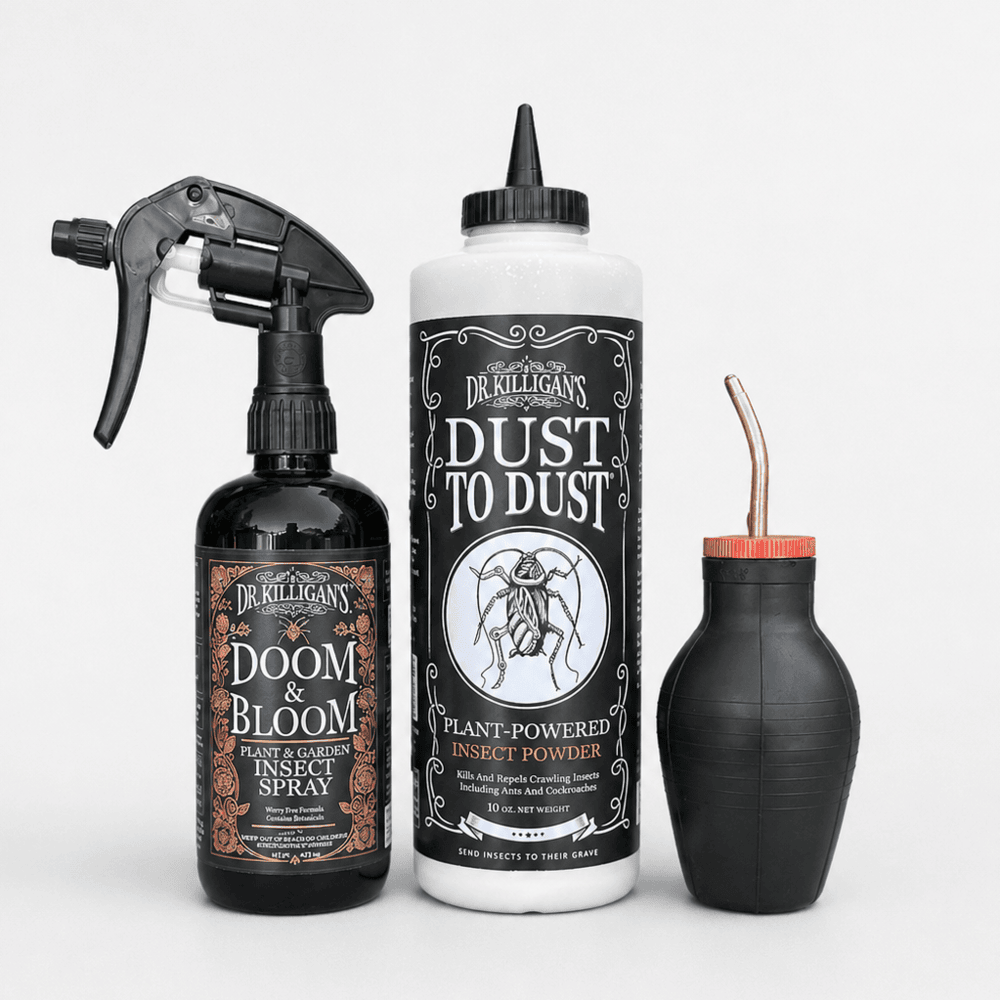
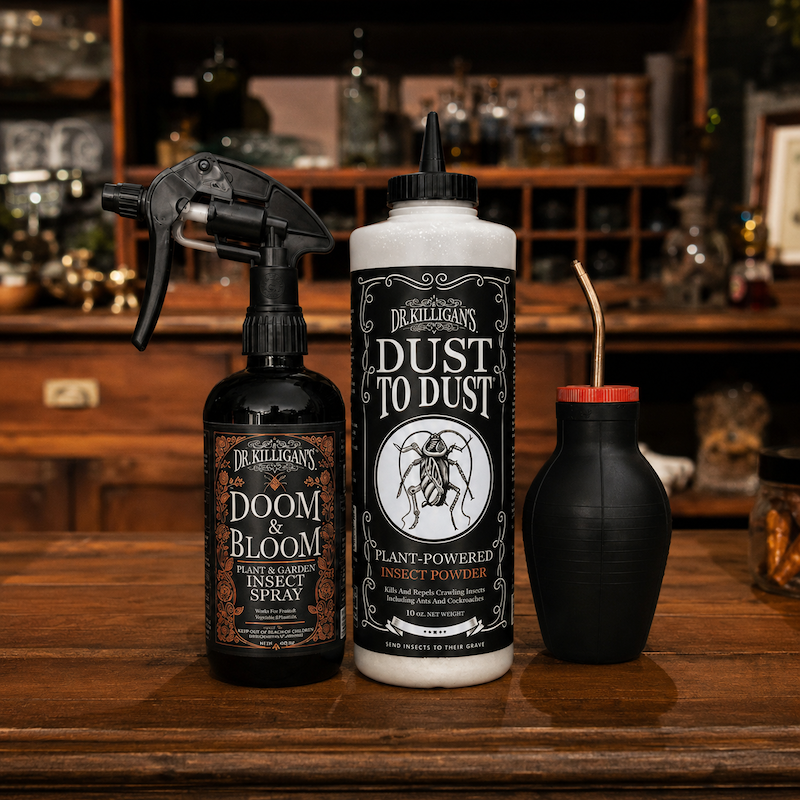
Dr. Killigan’s offers a plant-powered option designed for indoor use: Dust to Dust Non-Toxic Insect Powder.
Applied lightly along baseboards, under vanities, and inside closet crevices (according to label instructions), such powders provide a mechanical control method without introducing harsh residues into living spaces.
For those exploring broader natural pest control options, the full collection can be found here: Natural Bug Killers Collection.
Why Many Families Avoid Conventional Sprays
When silverfish appear repeatedly, it can be tempting to reach for conventional insecticides. However, many households prefer to minimize routine pesticide use—particularly in bathrooms, closets, and areas where children and pets have close contact with surfaces.
Studies from the CDC indicate that pesticide exposures can occur in residential settings, and some reports raise concerns about certain active ingredients when used improperly or too frequently. Research suggests a possible connection between higher household chemical load and irritation or sensitivity in some individuals, though outcomes vary widely depending on dosage and ventilation.
Because silverfish respond so predictably to environmental changes, non-toxic methods often prove sufficient when applied consistently.
Long-Term Prevention Habits That Work
- Declutter paper and cardboard storage.
- Vacuum baseboards and closet corners regularly.
- Wash and dry bathroom rugs frequently.
- Maintain airflow in closets by leaving doors open periodically.
- Inspect rarely used storage spaces seasonally.
Silverfish prefer silence and stillness. Gentle disruption—combined with moisture control—gradually discourages them.
Reclaim Your Quiet Corners—Naturally
Silverfish prefer the shadows, but your home does not have to. With moisture control, sealed storage, and targeted non-toxic protection, bathrooms and closets can remain calm, clean, and confidently maintained.
Exclusive Reader Perk: Use code BUGBLOG at checkout for 15% OFF your order.