

Published January 22, 2026
Reviewed by Julie Miller, BA in Language Arts, Editorial Lead, Dr. Killigan’s
TL;DR: Earwigs in winter usually do not “disappear.” They look for protected places to ride out cold weather, including outdoors under debris and sometimes inside warm, sheltered spaces. If you are seeing earwigs in the house in winter, it often comes down to moisture, shelter and easy entry points. This guide explains where earwigs go in winter, whether earwigs die in winter and what to do when they show up again.
Whether you are seeing earwigs now or just wondering what happens to them in colder months, it helps to understand where they go in winter and why they sometimes reappear inside.
Earwigs are built for hiding. When temperatures drop, they tend to move toward stable conditions: protected, damp and undisturbed. That can mean leaf litter outside. It can also mean a garage corner, basement edge or a crack along a foundation that stays a little warmer than the yard.
Earwigs in winter: what “cold weather” changes

Earwigs are most active when conditions are mild and humid. Cold weather pushes them to do three predictable things:
-
Seek shelter: they wedge into tight spaces that block wind and conserve warmth
-
Stay near moisture: they prefer areas that do not dry out completely
-
Move less: you see fewer of them because they spend more time tucked away
This is why earwigs in winter can feel mysterious. The population may be nearby, but their behavior becomes quieter and more hidden.
Where exactly do earwigs go in winter?
Most earwigs spend winter outdoors in protected micro-spaces, including:
- Under mulch, leaves and yard debris
- Beneath stones, pavers and landscape timbers
- In wood piles, stacked planters and stored outdoor items
- In cracks near foundations, gaps under thresholds and protected edges
If the environment around a home stays damp and cluttered, those protected spaces multiply. When the weather swings warmer for a day or two, earwigs can stir and wander, then tuck back in again.
Do earwigs die in winter?
Some do. Many do not.
A hard freeze can reduce numbers, especially when earwigs cannot find shelter. But in real life, most yards offer plenty of protection. Earwigs are good at locating small pockets that buffer temperature swings.
So if you are asking “do earwigs die in winter,” the practical answer is this: winter may thin them out, but it rarely eliminates the problem if shelter and moisture remain.
Why am I seeing earwigs in my house in winter?
Seeing earwigs in your home in winter usually means one of two things:
-
They slipped inside while seeking shelter
Small gaps around doors, weather stripping, thresholds and foundation lines become easy routes when earwigs are looking for a protected place.
-
Indoor conditions are more inviting than outside

Warmth helps, but the real magnet is often moisture. Earwigs are frequently found near areas that stay a little damp or rarely disturbed.
Common indoor “earwig-friendly” zones include:
- Basements, crawl spaces and garages
- Laundry rooms
- Bathrooms with persistent humidity
- Entryways where damp shoes and gear collect
- Storage areas with cardboard or clutter along the floor
If you can reduce moisture and remove hiding spots, you usually make your home far less interesting to them.
What you need to know now
-
One or two earwigs indoors: often a straggler. Focus on quick removal and moisture control.
-
Repeated sightings in the same area: look for dampness, clutter and a nearby entry point.
-
Earwigs near doors or the garage: tighten sealing and reduce outdoor shelter along that wall.
How to get rid of earwigs indoors in winter
Start with calm, practical steps. You do not need to turn your home upside down.
Featured in this article
Shop Dr. Killigan's Essentials


1) Remove what you see, then reset the area
- Vacuum or capture the earwig
- Clean up crumbs, damp rags and clutter along the baseboards
- Dry the area fully if moisture is present
2) Reduce moisture first
If earwigs keep showing up, moisture control is the fastest lever you can pull.

- Run a dehumidifier in damp basements
- Fix slow leaks and drips
- Vent bathrooms and laundry areas
- Avoid leaving wet sponges, floor mats or mop heads sitting out
3) Tighten entry points
Earwigs do not need a wide-open door. A small gap is enough.
- Add a door sweep
- Replace worn weather stripping
- Seal obvious cracks at baseboards or foundation edges
- Repair screens and check thresholds
A light, targeted approach for earwig hot spots
If you want a slightly more hands-on plan, the goal is simple: treat the cracks, edges and hiding places where crawling pests travel. This is where a focused product can fit without overdoing it.
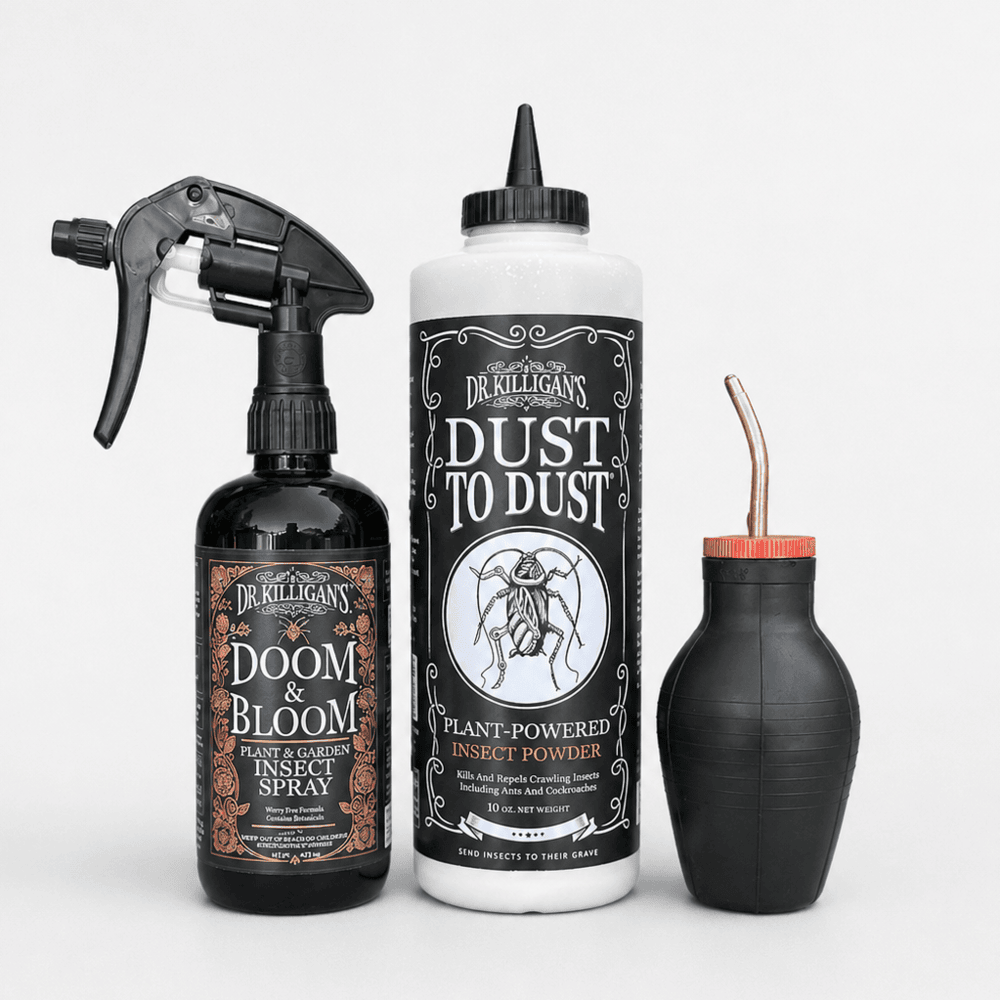
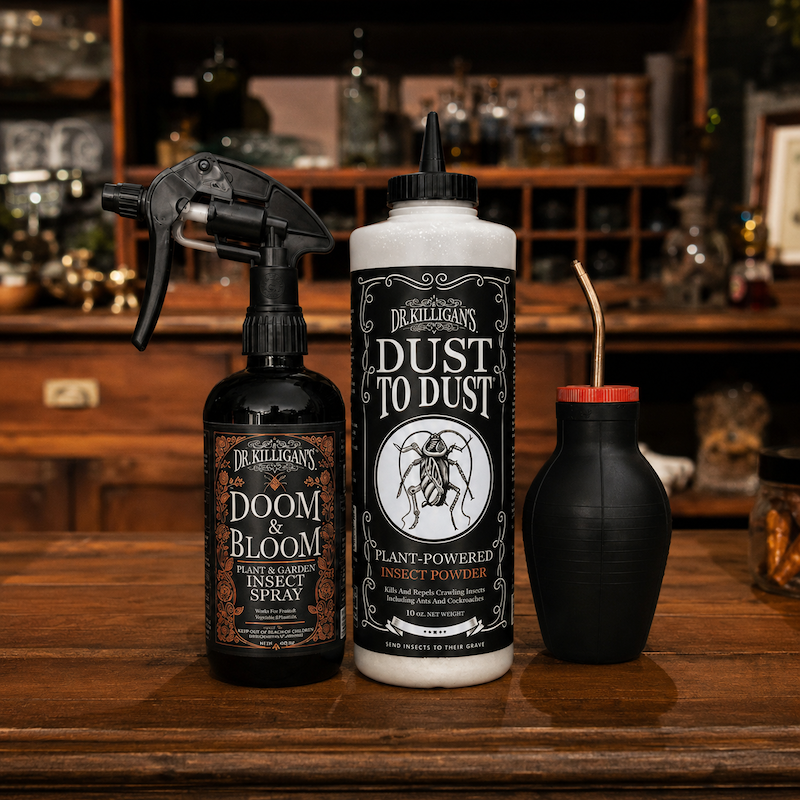
Dust to Dust for cracks and crevices
For tight gaps, voids and edges where pests like to hide, Dust to Dust Plant-Powered Insect Powder is a targeted insect powder option. It is designed for precision placement in cracks and crevices. When insects crawl through the powder barrier, it can kill by dehydration (desiccation). Use as directed and avoid creating airborne dust.
Where it can fit in a winter earwig plan:
- Along baseboards where you see repeat activity
- Around entry points where gaps are present
- In protected edges that stay damp or undisturbed
Six Feet Under for quick knockdown and touch-ups
If you prefer a spray option for visible activity, Six Feet Under Plant-Powered Insect Spray is a minimum-risk approach that kills bugs on contact. On certain surfaces, it can also offer up to 30 days of residual performance, depending on conditions. Always spot test surfaces and use as directed.
Where it can fit in a winter earwig plan:
- Quick response when you see activity in a specific area
- Touch-ups in problem zones after cleaning and drying
- Support for an “edges and entry points” routine
Preventing earwigs next season: the outdoor side matters
Even a winter-focused article should say this clearly: what happens outside affects what you see inside.
If you want fewer earwigs when conditions warm up, aim for an “outside-in” reset:

- Pull mulch, leaves and debris back from the foundation line
- Keep wood piles and stacked items away from exterior walls
- Reduce damp zones near the house by improving drainage
- Trim dense ground cover that stays wet
- Avoid overwatering near entryways
Optional support: a perimeter barrier
If you want to reinforce the exterior reset, Six Feet Under: Barricade Household Insect Kit is a concentrate + sprayer kit designed for a home perimeter barrier. Dilute per label and treat the exterior perimeter and entry points. Use as directed to create a home defense line that earwigs won’t cross.
Earwigs like shelter. If you remove the shelter, you remove the reason they stay close.
When you should ask for help
If you are seeing frequent earwigs in the house in winter and the same area keeps producing them, it is worth getting a second set of eyes. Our Customer Experience team can help you troubleshoot the likely entry point and the moisture factor.
Helpful info to share:
- Where you see them most (bathroom, basement, garage, entryway)
- Whether the area feels damp or stays cluttered
- A quick photo of the spot and nearby gaps if you can
Explore more
-
How to get rid of earwigs
What to do when earwigs are already inside, including moisture control, crack-and-crevice treatment and practical next steps. -
Can earwigs cause infestations?
Why earwigs are usually a nuisance rather than a colony-forming pest, and what repeated sightings may actually mean. -
Dispelling myths: Do earwigs bite and are they truly dangerous?
A clear look at the bite myth, what an earwig pinch can feel like and why these insects are often less threatening than they appear. -
10 habits to protect your home in winter
Simple seasonal habits that help reduce moisture, tighten entry points and make it harder for pests to settle in.