
Published January 15, 2026
Reviewed by Julie Miller, BA in Language Arts, Editorial Lead, Dr. Killigan’s
TL;DR: Those “big slow flies” in winter are usually cluster flies seeking a sheltered place to ride out the cold or houseflies taking advantage of indoor warmth and food. The quick comparisons below help you identify which fly you’re seeing and what to do next.
If you’re thinking “why am I seeing so many flies in my house?”, the answer usually comes down to which fly you’re dealing with and what’s drawing it indoors.
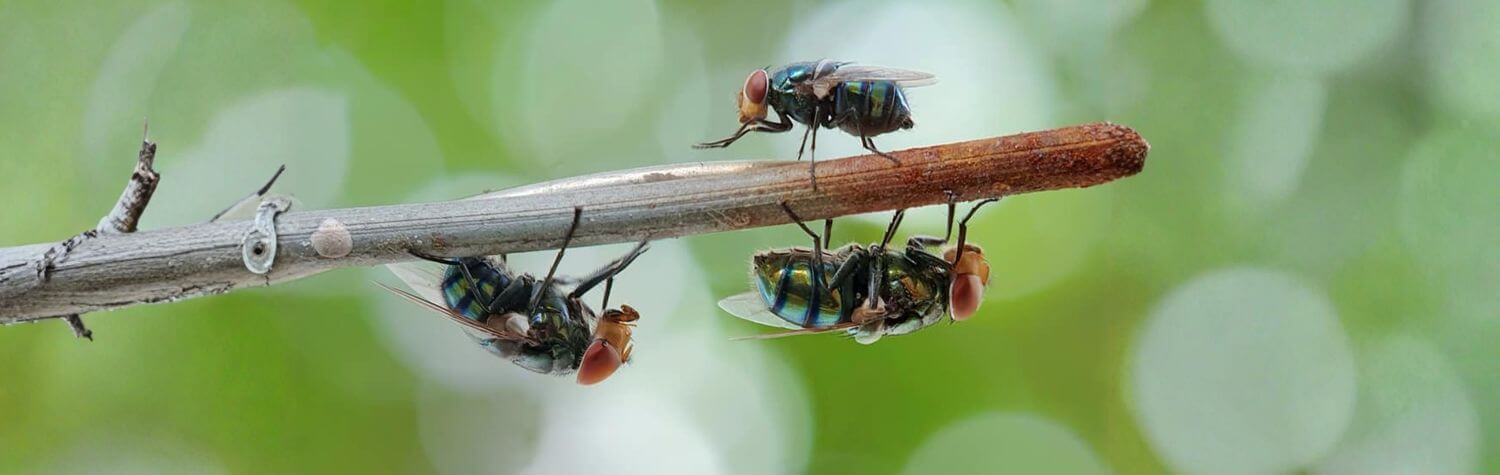
If you’re seeing flies drifting toward your windows on cold days, you’re not alone. “Winter flies” are usually one of two things:
- Cluster flies: accidental indoor guests that tuck into wall voids and attics to ride out the cold, then drift out on warm, sunny winter days
- Houseflies: true indoor opportunists that can hide out in warm, quiet spots or keep cycling indoors when warmth and food are available
Tip: Seeing flies on windows in the house is one of the most common winter patterns, especially once they become active indoors.
Quick winter-fly ID at a glance
If you only read one section, make it this:
- If they’re clustering at bright windows or glass: that strongly points to cluster flies
- Active flies near kitchens, trash, recycling or pet areas: often houseflies
- Striped back (visible from above): points to houseflies
- A slightly fuzzy look or soft golden sheen: leans cluster fly
What you need to know now
-
Window problem: Intercept at the glass and remove what you see (vacuuming helps)
-
Kitchen/pet/trash problem: Make those zones less rewarding (clean + dry + remove odors)
- One-off sightings: Treat them like stragglers—stay consistent for a few days before you assume it’s bigger
Cluster flies vs. houseflies (side-by-side)
 Cluster Fly (Pollenia rudis)
Cluster flies (common “big slow flies” in winter)
- Look: dull gray, often slightly larger; can have a soft golden/yellow sheen (fine hairs)
- Movement: sluggish, “lazy,” sometimes disoriented indoors
- Where you’ll see them: sunny windows, attics, wall voids; often unused rooms
- Smell: when crushed, may have a buckwheat-honey type odor
- Winter story: if you’re dealing with cluster flies in the house, they typically slipped indoors earlier in the season to overwinter. Indoors, they’re usually sheltering, not multiplying
 Housefly (Musca domestica)
Houseflies (the indoor opportunists)
- Look: dull gray; often shows four dark stripes on the back (thorax)
- Movement: more active; purposeful buzzing and looping
- Where you’ll see them: kitchens, trash, pet food, anywhere with food smells
- Smell: no distinctive “signature” smell for most people
- Winter story: can overwinter in sheltered spots; may persist indoors when warmth + food are available
Featured in this article
Shop Dr. Killigan's Essentials


Why do flies come inside when it’s cold?
Different flies show up in winter for different reasons—and for many homes, it’s less about “today” and more about what happened earlier in the season.
If they’re cluster flies
With cluster flies, winter sightings are often a delayed reveal. They commonly slip into protected spaces before the cold season and stay out of sight. Then, when sunlight and indoor heat create warm pockets, a few become active and wander—often ending up at the brightest parts of the home.
Common triggers include:
- a sunny afternoon after a cold stretch
- heat cycling more regularly indoors
- big temperature swings (cold night → warmer day)
In other words: you’re usually seeing a seasonal visitor stirring, not multiplying.
If they’re houseflies
Houseflies are more tied to indoor conditions. In winter, you may see them because:
- a few adults were tucked away in sheltered indoor spots and become active again, or
- warmth plus food odors and moisture keep them active and returning to “busy” rooms
If you want a deeper dive into why houseflies can stick around indoors during winter, we have a dedicated guide on that topic below.
How to confirm which fly you’re seeing (when it’s not obvious at first glance)
Sometimes winter flies don’t give you a perfect “textbook” moment. They fly off. You catch only a blur. That’s normal.
Here’s the simplest way to get confident—without re-reading the whole guide:

- Give yourself a better view, not more guesswork. A quick top-down photo (phone zoom helps) is the fastest tie-breaker. You’ll catch details you won’t see mid-flight.
- Watch for the pattern, not the one-off. One fly can be random. But when you notice a repeatable routine—same time of day, same rooms, same conditions—you’re getting a real clue.
- Use the “vibe” test. Some winter flies move like they’re half-awake. Others behave like they’re on a mission. That difference is often more useful than size.
- Let timing do some of the work. If sightings spike after heat runs more, or after big temperature swings, that context can help confirm what you’re dealing with.
If you’re still unsure, our Customer Experience team can help you identify the fly. The most helpful thing to send is a top-down photo plus one sentence on where you’re seeing them most.
What to do right now (without turning your home into a chemistry lab)
Winter flies are annoying—but you can usually make quick progress with simple moves.
1) Remove the adults you can see
- Vacuum flies at windows (fast, clean and no wall smears)
- Empty the canister or bag promptly (outside, if possible)
2) Intercept them at the windows (before they roam)

Even if the flies started in a wall void or attic space, many “winter flies” end up at the glass once they’re active. That makes your windows the simplest place to catch them—before they drift room to room.
A simple window trap option: The Fly Inn
If your “winter flies” keep returning to the same windows, The Fly Inn is designed to meet them there.
- Made for windows and glass doors (especially the ones flies keep “choosing”)
- Uses a proprietary visual attractant plus sticky inserts to help trap flying insects
- Trap-and-hide inner walls help keep unsightly fly bodies out of sight
Placement tip: Choose a “high-traffic” window, clean the glass and slightly dampen the suction cups for a strong hold.
Always use as directed.
3) Cut the attractants (houseflies)
Houseflies tend to stick around when there’s something to eat, drink or smell.
A quick winter checklist (remove what houseflies love):
- Keep trash sealed; clean the can occasionally
- Rinse recyclables (especially cans and bottles) before they sit indoors
- Store ripe fruit in the fridge during fly season
- Wipe counters and take out food scraps regularly
- Keep kitchen and pet areas dry and tidy (don’t leave damp mops/sponges sitting out)
A small cleanup in the right place often makes a big difference.
Prevention that sticks (choose the plan that matches the fly)
Preventing cluster flies (the seasonal-invader plan)

With cluster flies, prevention is mostly about blocking entry before they settle in.
Focus on:
- Sealing gaps around windows, doors, siding, soffits, vents and utility lines
- Repairing windows and doors and adding door sweeps
- Refreshing weather stripping before the season changes
- Paying attention to the sunny side of the home (a common gathering zone)
Think of it as “outside-in” prevention: fewer entry points now means fewer surprise appearances later.
Preventing houseflies (the indoor-opportunist plan)
With houseflies, prevention is less about the structure and more about the daily conditions that keep them interested.
Try:
- Keep “food-scent” zones boring: wipe counters, rinse recyclables and take food scraps out regularly
- Dial down moisture: don’t leave damp mops/sponges sitting out; keep pet/kitchen areas dry
- Tighten storage: fruit, pet food and compost containers should be sealed or moved to lower-odor storage
Houseflies are persistent. But they’re also predictable.
If flies keep showing up at the glass, meet them there with The Fly Inn, then follow the prevention plan that matches the fly.
Explore further
If you want to keep going, here are a few more fly guides you might find helpful:
- How to kill house flies (for houseflies already inside)
- How to get rid of house flies in the garbage (if the kitchen trash can is the draw)
- 4 reasons you see houseflies in the winter (and how to stop them)
- Phorid flies vs. fruit flies: key differences and how to deal with them
-
6 must-know tips for choosing the best indoor fly control solution (helpful if you’re deciding what to use next)