
Published July 17, 2024 • Updated May 22, 2026
Reviewed by Julie Miller, BA in Language Arts, Editorial Lead, Dr. Killigan’s
TL;DR: Pantry moths and clothes moths are not the same. Pantry moths are reddish-brown, zig-zag fliers that infest stored dry goods like flour and rice—and they do not eat clothes. Clothes moths are smaller, golden-buff moths whose larvae feed on natural fibers such as wool and silk.
In this guide, you’ll learn:
- What pantry moths look like (and where they hide)
- What clothes moths look like—including larvae
- Whether pantry moths eat clothes (they don't)
- Which moth trap matches the pest you have
Pantry moth vs clothes moth: What’s the difference?
The difference is where they live and what their larvae feed on—pantry moths cluster around stored foods, while clothes moths stay close to closets, drawers, rugs and other natural-fiber items. That’s why the right trap (and placement) matter.
Use the right trap for the moth you have.
Pantry moth traps are designed for food moths found near dry goods. Clothing moth traps are designed for fabric-damaging moths found near wool, silk, fur and feathers. If the trap does not match the moth species, it may not attract the moths you’re seeing.
Quick answer: pantry moth or clothes moth?
If moths are flying near kitchen lights or food storage, you’re likely seeing pantry moths. If moths are hiding in closets, drawers or stored garments—and you’re finding fabric holes—you’re likely dealing with clothes moths. Pantry moths do not eat clothes. Clothes moth larvae—not adult moths—damage fabrics.
What is a pantry moth?
The pantry moth—also called the Indian meal moth (Plodia interpunctella)—is a common household pest found wherever stored dry foods are kept (pantries, cupboards, pet food bins and birdseed containers).
If you’re seeing small moths in the kitchen, this is often the culprit. If you’ve confirmed they’re pantry moths, follow our complete guide to getting rid of pantry moths and preventing them from returning.
Also called grain moth, weevil moth or flour moth
 Indian meal moth (Plodia interpunctella)
What does a pantry moth look like?
Pantry moth forewings are typically two-toned: whitish-gray near the body and reddish-brown at the tips.
Quick pantry moth identification checklist:
- Erratic flight pattern
- About ½ inch long
What do pantry moth larvae look like?
 Pantry moth larvae
Pantry moth larvae are small, pale caterpillar-like larvae often found in or near dry goods.
They are:
- Cream-colored with a small brown head
- About ⅓ to ½ inch long
- Surrounded by fine silk webbing
As they feed, their webbing can cause grains or powders to clump together and tiny debris may collect inside packaging.
If you’re seeing small worms inside flour, rice or cereal, you’re likely dealing with pantry moth larvae.
Where do pantry moths hide?
You’ll usually find them in places tied to food storage:
- Pantry shelves and cabinet corners
- Cracks along shelf pin holes and trim
- Lids, seams and folds of food packaging
- Pet food and birdseed containers
Do pantry moths eat clothes?
No—pantry moths do not eat clothes, wool, silk or other fabrics. Their larvae feed on stored dry foods, not textiles.
Common pantry moth foods include flour, rice, cereal, pasta, baking mixes, chocolate, nuts, seeds, dried fruit, spices, tea and beans.
If you’re finding holes in clothing, you’re likely dealing with a different pest, often clothes moths or carpet beetles. For a deeper explanation, read our guide: Can pantry moths eat my clothing?
 Lifecycle of a pantry moth
If you’re finding webbing or larvae in food packages, follow our step-by-step pantry moth removal guide: How to get rid of pantry moths.
What is a pantry moth's life cycle?
A pantry moth’s life cycle can range from about 1 month to 10+ months, depending on temperature and food availability.
Here’s the pattern:
- Eggs: Females lay eggs directly near or inside a food source.
- Larvae: After hatching, larvae feed on dry goods until fully grown.
- Pupae: Mature larvae leave the food and pupate in nearby hidden spots.
- Adults: Adults emerge, mate and lay eggs to begin the cycle again.
Adult pantry moths do not feed.
What is a clothes moth?
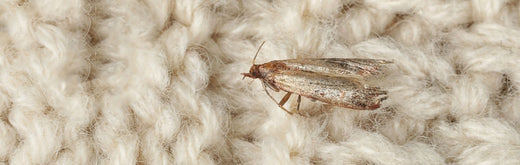
 Webbing clothes moth (Tineola bisselliella)
A clothes moth is a small, fabric-damaging moth that targets natural fibers such as wool, silk, fur and felt.
The two most common species in North America are:
- Webbing clothes moth (Tineola bisselliella)
- Casemaking clothes moth (Tinea pellionella)
If you’re noticing holes in sweaters, rugs or stored garments, this is often the culprit.
Also called webbing moth or casemaking moth and sometimes referred to as a “closet moth”
What does a clothes moth look like?
 Casemaking clothes moth (Tinea pellionella)
Clothes moths are smaller than pantry moths—typically about ¼ inch long. They have narrow bodies and are weak fliers.
Quick clothes moth identification checklist:
- Small, golden or tan moth
- Avoids light; prefers dark closets and storage areas
- Often seen crawling rather than actively flying
What do clothes moth larvae look like?
Clothes moth larvae are small, cream-colored and caterpillar-like, with a small brown head.
Larvae are:
- About ⅓ to ½ inch long
- Found near wool, silk, fur, feathers or felt
-
Hidden in folds, seams or quiet storage areas
Casemaking moth larvae carry a small, cigar-shaped silken case that moves with them—often mistaken for lint or a grain of rice.
Where do clothes moths hide?
Clothes moths prefer dark, undisturbed areas such as:
- Closets and wardrobes
- Storage boxes and drawers
- Under rugs and along carpet edges
- Folded or rarely worn garments
They are far less likely to be seen in kitchens or open living spaces.
Do clothes moths eat clothes?
Yes—but only in the larval stage. Adult moths do not munch, not on your clothes, not on anything. They don't even have functional mouths. They survive only long enough to mate and lay eggs.
Clothes moth larvae feed on materials that contain keratin, a protein found in animal-based fibers such as:
- Wool
- Silk
- Fur
- Feathers
- Felt
- Leather
 Lifecycle of a clothing moth
They may also chew cotton, linen or synthetic fabrics if those fabrics are soiled with sweat, oils or food residue.
If you’re finding irregular holes in sweaters, rugs or blankets, clothes moth larvae are the likely cause.
What is a clothes moth life cycle?
A clothes moth’s life cycle typically lasts about 2 to 3 months, but it can extend much longer depending on temperature, humidity and food availability.
Here’s the pattern:
- Eggs: Females lay 40-50 eggs directly onto natural fibers.
- Larvae: The larvae hatch and feed on fabric.
- Pupae: Each larva spins a silken cocoon—sometimes incorporating fabric fibers—and transforms inside.
- Adults: Adult moths emerge to mate and lay eggs.
Pantry moth vs clothes moth: How to tell the difference
Knowing the difference between pantry moths and clothes moths is crucial for choosing the right solution.
| Characteristics | Pantry Moths | Clothing Moths |
|---|---|---|
| Scientific name | Plodia interpunctella (Indian meal moth) | Tineola bisselliella (Webbing clothes moth) and Tinea pellionella (Casemaking clothes moth) |
| Appearance | Approximately 0.5 inches long; forewings are whitish-gray near the body and reddish-brown at the tips. No hairs on the wings. | Small, about 0.25 inches long; golden or buff-colored. Wings are lined with hair along the edges. |
| Flight behavior | More active fliers that move in an erratic, zigzag pattern while searching for food. | Weak fliers that move in a direct pattern and only fly when necessary. |
| Light attraction | Strongly attracted to light, making them more visible in open areas. | Prefer dark spaces and avoid light. |
| Habitat | Found near stored food products in pantries, kitchens, grocery stores and food storage facilities. | Prefer dark, undisturbed areas such as closets, wardrobes and storage boxes containing natural fibers. |
| Diet | Larvae feed on grains, cereals, flour, pasta, dried fruits, nuts and other dry food products. | Larvae feed on keratin-rich materials like wool, silk, fur and feathers and may also chew on clothing stained with food, sweat or oil. |
| Signs of infestation | Presence of larvae or webbing in food packages; adult moths flying in kitchens; infested food may clump together due to webbing. | Irregular holes in clothing or fabrics; silky webbing or cases on textiles; adult moths crawling on walls or in closets. |
| Life cycle | 1–10 months, depending on temperature and food supply; rapid reproduction in warm kitchens. | 1–24 months; larvae may remain hidden in fabrics for months before damage is noticed. |
| Control measures | Discard contaminated food; deep-clean pantry shelves; store dry goods in airtight containers; use pantry moth pheromone traps to break the reproductive cycle. | Vacuum closets thoroughly; launder or dry clean affected garments; store natural fibers in sealed containers; use clothes moth pheromone traps to monitor and reduce adult males. |
Are pantry moths attracted to light?
Yes—pantry moths are attracted to light. Adult pantry moths are commonly seen flying near windows, ceiling fixtures and lamps, especially in kitchens.
Clothes moths behave differently. Clothes moths avoid light and prefer dark, undisturbed spaces. They are more likely to be seen crawling on walls inside a closet than flying toward a lamp.
Quick rule:
- Moths flying around kitchen lights → likely pantry moths
- Moths hiding in dark closets → likely clothes moths
Pantry moth larvae vs clothes moth larvae
Pantry moth larvae and clothes moth larvae can look similar: small, pale and worm-like. The best clue is where you find them.
- In flour, cereal, rice or other dry foods: likely pantry moth larvae
-
In wool sweaters, rugs or other natural fibers: likely clothes moth larvae
Pro tip: In rare cases of heavy pantry infestations, larvae may wander away from food to pupate. Webbing in a closet without fabric damage can still point to pantry moths. But holes in natural-fiber items are more consistent with clothes moth larvae.
How to get rid of pantry moths
 Pantry Moth Trap
To eliminate pantry moths, act quickly and methodically:
- Discard any infested food immediately.
- Vacuum shelves, corners and cracks thoroughly.
- Wipe surfaces clean and store all dry goods in airtight containers.
- Deploy Pantry Moth Traps® to interrupt reproduction.
By capturing males, the mating cycle is disrupted—preventing fertile eggs from being laid and stopping the next generation of larvae.
How to get rid of clothes moths
 Clothing Moth Trap
Clothes moth control focuses on fabrics and hidden areas:
- Launder or dry clean affected garments.
- Vacuum closets, baseboards and carpet edges thoroughly.
- Freeze delicate natural-fiber items if needed.
- Place Clothing Moth Traps® inside closets or storage areas.
These traps attract and capture adult male clothes moths, helping break the reproductive cycle.
Why aren’t my moth traps catching anything?
If your moth traps aren’t catching insects, there are two common reasons:
- The trap may not match the moth species present.
- The moths you’re seeing may be females or immature moths.
Pheromone traps are species-specific and attract adult males only. If traps remain empty after 10–25 days, reassess identification and placement.
Why do moth traps only catch adult males?
Pheromone moth traps are designed to interrupt reproduction, not catch every moth in the room. The lure mimics the scent of a female moth, attracting adult males to the trap.
Final word: Pantry moths and clothes moths are not the same
Pantry moths infest stored food. Clothes moths target natural fibers.
Each requires its own trap and placement strategy.
Once identified, you can act with precision:
- For pantry infestations → use Pantry Moth Traps.
- For clothes infestations → use Clothing Moth Traps.
If you’re unsure what you’re seeing, our team is here to help. Contact us.
Pest control should feel measured. Intentional. And quietly effective.
Explore more
-
How to get rid of pantry moths
(The complete step-by-step guide.) -
How to get rid of clothes moths
(A step-by-step approach for stopping fabric damage and preventing return activity.) -
What do pantry moths eat?
(Which foods attract them—and why infestations often start in unopened packages.) -
Where do clothing moths come from?
(How closet infestations begin—and how moths enter the home.) -
Can pantry moths eat my clothing?
(Why food moths don't target fabric—and when you're likely dealing with a different species.)