
Published July 31, 2026
Reviewed by Julie Miller, BA in Language Arts, Editorial Lead, Dr. Killigan's
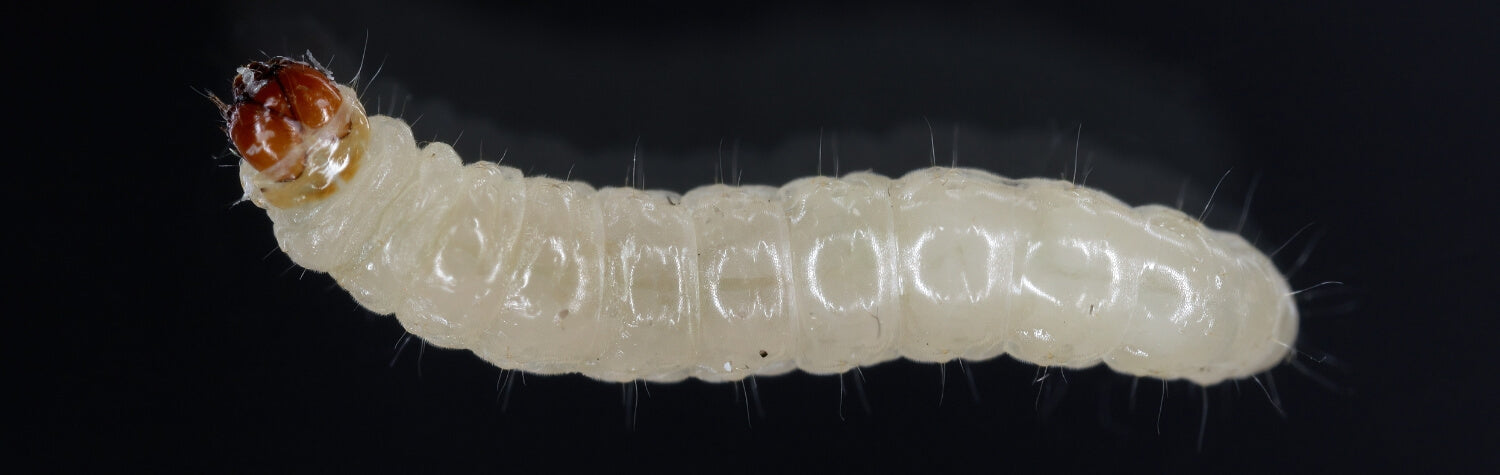
TL;DR: Pantry moth larvae are the caterpillar stage of the Indian meal moth. They are usually off-white or cream-colored, grow up to about ½ inch long and have a darker brown head. Larvae crawl onto walls and ceilings when they leave their food source to pupate. The fix is to find and remove the infested food, clean the pantry carefully and use pheromone traps to catch adult male moths.
Found a small white worm crawling through flour, across a pantry shelf or up your kitchen wall? It may be a pantry moth larva.
These larvae are not maggots. They are small caterpillars that feed inside dry foods and may later appear on pantry shelves, walls or ceilings. The source is usually nearby and can be removed with a careful pantry inspection.
What do pantry moth larvae look like?
Pantry moth larvae are usually:

- Off-white, cream or pale yellow
- Up to about ½ inch long when fully grown
- Segmented, with a soft caterpillar-like body
- Marked by a darker tan or brown head
Their color can vary slightly depending on what they have been eating. A larva feeding in cornmeal may look more yellow, while one found in flour may appear almost white. Pantry moth larvae also have small legs, although they may be difficult to see.
Webbing is another useful clue. The larvae spin fine silk as they feed, which can make flour, grain, crumbs or seeds clump together. You may also see strands along package seams or around container lids.
Pantry moth larvae or maggots?
Fly maggots are legless and lack the same distinct, hardened brown head. Because pantry moth larvae are caterpillars, their bodies are more defined and they move by crawling rather than wriggling.
Pantry moth larvae or clothing moth larvae?
Both can be pale caterpillars with darker heads. Location usually tells the story.
Pantry moth larvae are found in dry foods such as flour, cereal and pet food. Clothing moth larvae are associated with fabrics and animal-based fibers such as wool, fur and feathers.
Why are pantry moth larvae on my walls or ceiling?
Once mature, a pantry moth larva may leave its food package and crawl across shelves, walls or ceilings in search of a protected place to form a cocoon. It may settle in a corner, cabinet joint, screw hole or another sheltered crevice.
Do not limit your search to the shelf directly below where you found the larva. Because larvae can travel away from the original package, inspect the entire pantry and nearby food-storage areas. Check less obvious sources, including pet treats, birdseed, decorative dried corn, baking chocolate and forgotten bags stored on upper shelves.
Continuing to find larvae after a surface cleaning often indicates that a food source or hidden pupa remains.
Where do pantry moth larvae come from?
In many homes, pantry moths arrive inside a purchased dry-food product.
A package may contain eggs or very young larvae that were difficult to see during processing, shipping or storage. Once inside a warm pantry with steady access to food, the larvae continue developing and may spread to nearby products.

Begin with opened packages, but do not stop there. Larvae may enter boxes, paper bags, thin plastic and other lightweight packaging. Look for:
- Fine webbing around package seams
- Clumped food
- Small holes in bags or boxes
- Larvae, shed skins or cocoons
- An unusual odor or discoloration
- Adult moths resting near the pantry
Pay particular attention to foods that have remained untouched for several weeks or months.
For the foods larvae infest most often, see What do pantry moths eat
Are pantry moth larvae harmful if eaten?
Accidentally eating a pantry moth larva is unlikely to make you sick. Pantry moth larvae do not bite or sting, and pantry moths are not known to transmit human pathogens.
Still, discard visibly infested food rather than trying to remove the larvae and keep the rest.
How do you get rid of pantry moth larvae?
The key is to remove the infested food source, clean the affected storage area and address the adult moths that can continue the cycle. Killing only the larvae you can see is not enough.
After cleaning, use Pantry Moth Traps to catch adult male pantry moths. The traps do not catch larvae, but they help interrupt the next generation by reducing mating.
For the complete cleanup and prevention process, read our full step-by-step guide: How to get rid of pantry moths: 8 proven ways
Does killing the larvae end the infestation?
No. Killing the larvae you can see does not remove eggs hidden in food, pupae tucked into crevices or adult moths already flying through the home.

Pantry moths develop through four stages: egg, larva, pupa and adult. Each stage can be present simultaneously, which is why a successful response must address both the food source and the reproductive adults.
Removing infested food stops developing larvae from continuing to feed. Vacuuming removes wandering larvae, pupae and food debris. Pantry Moth Traps help reduce the chance of successful mating.
You may still see an occasional moth or larva after the first cleaning. That does not mean the plan has failed. It means you should continue checking for a missed package, cleaning hidden crevices and monitoring the traps.
Explore More
-
Why pantry moths keep coming back (and how to prevent them)
(Deeper answers on persistence, food disposal and long-term prevention.) -
How to get rid of pantry moths: 8 proven ways
(The step-by-step removal checklist for eliminating every life stage.) -
What is the life cycle of a pantry moth?
(How larvae fit into the four-stage cycle and how long each stage lasts.) -
What do pantry moths eat?
(Which dry goods larvae infest most often and where to look first.)