
By Maren Caldwell, Guest Author
TL;DR: Springtails usually show up in bathrooms because moisture is lingering where it should not—under mats, around drains, behind toilets, and inside damp vanity cabinets. Long-term control is less about “killing bugs” and more about drying the habitat: fixing leaks, improving airflow, reducing humidity, and removing the biofilm and mildew they feed on.
Springtails have an almost theatrical timing. They appear just as a household begins to feel put-together again—fresh towels, a cleaned mirror, perhaps even a candle lit with sincere intentions—and then, near the base of the tub or under a bath mat, a scatter of tiny specks hops as if startled.
They are not fleas. They do not live on people. They do not bite. Springtails are small, moisture-loving insects that thrive in damp places and, when conditions are right, multiply quickly enough to become visible. Bathrooms—warm, humid, and full of hidden crevices—can be their favorite drawing room.
The good news is that springtails are less a “pest problem” than a “moisture report.” When the environment dries, they typically disappear. A home does not have to become harsh or chemical-heavy to reclaim calm. It simply has to become less hospitable to damp-loving guests.
What Are Springtails, Exactly?
Springtails are tiny insects (often gray, black, or pale) known for their ability to “spring” when disturbed. That hop is powered by a small forked structure under the body, like a built-in trampoline. (It is an impressive party trick, though not one most homeowners requested.)
They usually live outdoors in soil, leaf litter, and mulch, where they help break down organic material. Indoors, springtails are drawn to damp areas with mold, mildew, algae, or the thin, slimy film that can build up around drains and wet surfaces.
If springtails are showing up inside, the underlying cause is almost always one of the following: persistent humidity, a slow leak, poor ventilation, or moisture trapped in places that rarely dry fully.
Why Springtails Love Bathrooms and Closets
Bathrooms offer springtails exactly what they prefer: moisture, darkness, and microscopic food sources that flourish when water lingers. Common attractants include:
- Humidity that stays high after showers (especially without a working fan or open window)
- Condensation on pipes, toilet tanks, or cold water lines
- Slow leaks under sinks, around toilets, or at tub seals
- Wet bath mats and towels that never fully dry
- Biofilm in drains (the “invisible sludge” that builds up inside pipes)
- Mildew behind cabinets or in gaps along baseboards and caulk lines
Springtails are not attracted to mess in the moral sense. They are attracted to moisture in the practical sense. A spotless bathroom can still harbor them if humidity remains trapped.
The Quick Reality Check: Is It Really Springtails?
Springtails are often mistaken for gnats or fleas because they move suddenly. A few simple clues help confirm identity:
- Springtails hop when disturbed; fleas also hop, but fleas typically focus on pets and upholstered areas.
- Springtails cluster in damp zones (bath mats, drains, under sinks, basement bathrooms).
- Springtails do not bite and do not linger on skin.
If bites are occurring or the insects are concentrated in bedding, another pest may be involved and professional identification is sensible. For most households, however, bathroom springtails behave like tiny humidity alarms.
Featured in this article
Shop Dr. Killigan's Essentials


Step 1: Dry the Bathroom Like a System, Not a Scene
Long-term control starts with a simple goal: remove the conditions springtails need to thrive. Drying must be consistent, not occasional.
- Run the bathroom fan during showers and for at least 20–30 minutes after.
- Open windows when weather allows to exchange damp air.
- Hang towels to dry fully rather than folding them over hooks where moisture stays trapped.
- Lift bath mats daily to let floors dry underneath.
- Wipe condensation on pipes and toilet tanks when noticeable.
Springtails thrive when dampness becomes routine. They leave when dryness becomes routine.
Step 2: Find the Moisture Source (The Part Everyone Wants to Skip)
When springtails persist, the cause is often hidden. The most helpful question is not “How do they get in?” but “Where does water stay?”
- Check under the sink for slow leaks at supply lines and traps.
- Inspect the toilet base for moisture or soft flooring.
- Look behind the toilet for condensation drips or sweating pipes.
- Examine caulk lines around tubs and showers for gaps that allow water behind walls.
- Open the vanity cabinet and smell for mustiness, a common sign of persistent damp.
In many homes, the true culprit is not dramatic. It is a slow, quiet leak that has been politely present for weeks.
Step 3: Clean the Places Springtails Feed
Springtails are often sustained by microscopic food sources: mildew, algae, and biofilm. That means “drying out” is most effective when paired with cleaning that removes what moisture created.
- Scrub shower corners and grout lines where mildew can form.
- Clean the underside of bath mats and allow them to dry fully.
- Wash or replace damp sponges and cleaning cloths regularly.
- Address drain biofilm with mechanical cleaning (a drain brush) rather than relying on fragrance-based quick fixes.
Many homeowners are surprised to learn that drain interiors can host a persistent film even when the sink looks pristine. Removing that film reduces the “food supply” springtails may exploit.
For households building a thoughtful non-toxic prevention toolkit, this guide to top non-toxic essentials highlights curated tools that support everyday household care and comfort.
Step 4: Reduce Humidity in the Whole Zone
Bathrooms rarely exist in isolation. Humidity can drift into nearby closets, linen cabinets, and hallway storage—especially in older homes with tight airflow or homes where the fan is more decorative than functional.
- Aim for indoor humidity around 30–50% when possible.
- Use a dehumidifier in persistently damp areas (basement bathrooms are classic offenders).
- Do not store extra towels in a damp closet unless airflow is reliable.
- Leave closet doors ajar occasionally to prevent stale, humid air from settling.
Springtails are excellent at finding damp microclimates. They do not need a swamp; they need a few square inches of consistent moisture.
Step 5: Use Non-Toxic Physical Control for Crevices and Damp Edges
Once moisture is being corrected, many homeowners prefer a practical, non-toxic method to address the lingering stragglers—especially along baseboards, behind toilets, or in the seam where tile meets drywall.
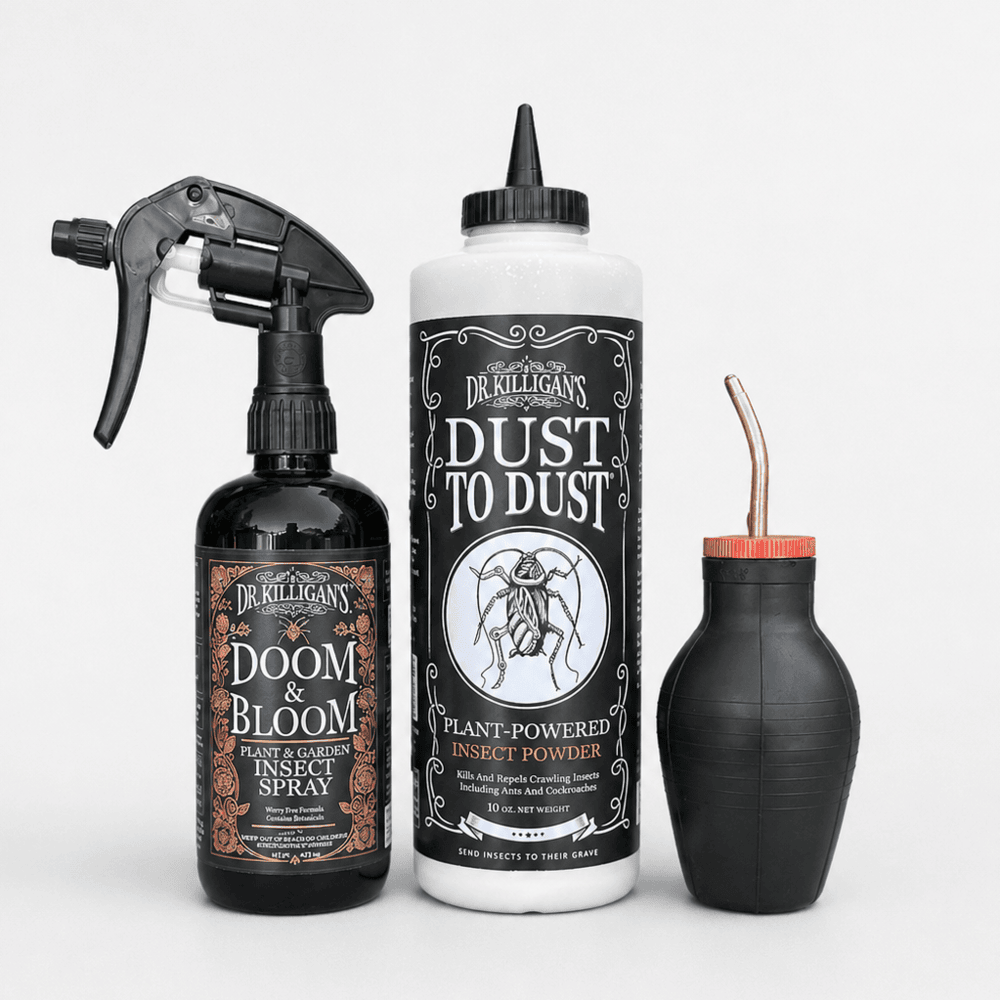
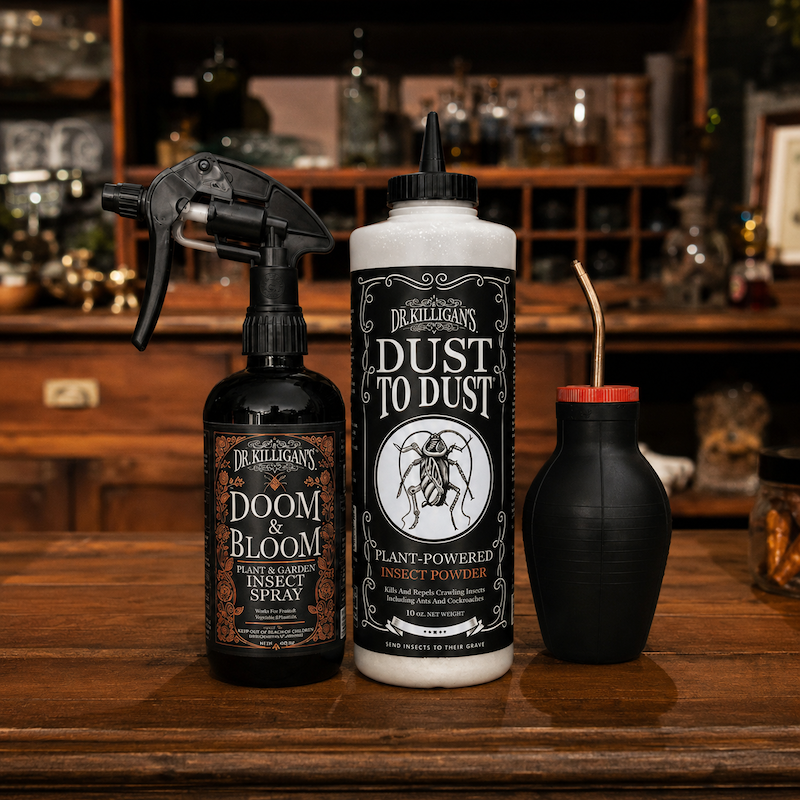
A dry, non-toxic powder can be useful for cracks and hidden edges that stay sheltered. One option is Dust to Dust Non-Toxic Insect Powder, which may be applied according to label instructions in targeted areas where moisture-loving insects travel.
This approach works best as part of a moisture-first system: correct humidity, remove damp “food sources,” then use physical control in the quiet architectural seams where insects prefer to move unseen.
For those assembling a broader home toolkit, browsing the complete collection can help identify practical, non-toxic options for common household pests. For additional interior tools and powders, the Sprays & Powders Collection offers relevant categories.
A Measured Note on Chemical Sprays in Bathrooms
Bathrooms can be tempting places to spray aggressively because the problem feels contained. Yet bathrooms also tend to be enclosed spaces with limited airflow, which changes how anything applied indoors behaves.
Studies from the CDC indicate that pesticide exposure can occur in residential settings, particularly when products are used indoors without adequate ventilation. Some reports raise concerns about repeated or improper application of certain active ingredients, especially in spaces where dampness encourages frequent re-application out of frustration rather than strategy.
Potential risks may include residue settling on floors, tub edges, and other surfaces frequently touched during daily routines. For that reason, many households reserve stronger interventions for situations requiring professional guidance and emphasize moisture control, cleaning, sealing, and targeted non-toxic alternatives first.
Long-Term Prevention Checklist
Springtails may vanish quickly once humidity is controlled, but prevention is what keeps them from returning the next time the weather turns damp.
- Fix leaks promptly and re-check under sinks seasonally.
- Keep bath mats washable and ensure they dry fully between uses.
- Maintain bathroom fan performance (clean the cover; confirm airflow).
- Keep grout and caulk intact so water does not migrate behind walls.
- Reduce clutter under sinks to improve airflow and visibility.
- Inspect linen closets for dampness, especially on exterior walls.
A bathroom that dries well is not just more comfortable—it is also less appealing to the small creatures that prefer to live quietly at the edge of dampness.
Reclaim Your Bathroom—Naturally
Springtails prefer damp corners and hidden seams, but a well-ventilated, well-maintained bathroom gives them little reason to linger. With steady drying habits, simple cleaning, and targeted non-toxic support where needed, the room can return to what it was meant to be: calm, clean, and quietly functional.
Exclusive Reader Perk: Use code BUGBLOG at checkout for 15% OFF your order.