
By Claire Hensley, Guest Author
TL;DR: Phorid flies usually appear in kitchens and utility rooms because hidden organic buildup, damp drains, leaks, or decaying residue is giving them a place to breed. Long-term control depends on finding and removing that source—not just swatting adults—using cleaning, drying, sealing, and targeted non-toxic support around the space. In most homes, the real solution is sanitation and moisture correction, not a fly-specific quick fix.
Phorid flies are the sort of pest that makes a homeowner feel unfairly accused. The counters may be clean, the sink may be empty, and yet there they are: tiny, restless flies skittering across a wall or zigzagging low over a utility sink with unmistakable persistence.
They are often mistaken for fruit flies at first glance, but phorid flies behave differently. They run in quick, erratic bursts before taking flight, and they are especially drawn to hidden decay, damp buildup, and the sort of unnoticed mess that lives just out of sight—in drains, under appliances, around utility lines, or beneath flooring where moisture has lingered too long.
The encouraging part is this: phorid flies are not mysterious once their breeding source is understood. They are less a punishment than a clue. Find what is fermenting, leaking, or slowly breaking down, and the problem usually begins to resolve with impressive speed.
What Are Phorid Flies?
Phorid flies are very small flies, often tan to dark brown, with a distinctive hunched appearance. They are sometimes called “scuttle flies” because they prefer to run across surfaces before lifting off.
Unlike fruit flies, which are strongly associated with ripening produce and sugary residue, phorid flies are more likely to breed in:
- Drain sludge and pipe film
- Organic buildup under appliances
- Leaky plumbing and soggy subfloors
- Garbage residue in hidden crevices
- Moist utility room corners
- Decaying matter in hard-to-clean places
This is why kitchens, laundry areas, mudrooms, basement utility spaces, and under-sink cabinets often become their preferred territory. The room itself is not the issue; the concealed breeding site is.
Why Phorid Flies Show Up in Kitchens and Utility Rooms
These flies are drawn to places where moisture and organic matter combine. Kitchens and utility rooms supply both with remarkable generosity.
In kitchens, common sources include:
- Residue under refrigerators and dishwashers
- Sticky liquid trapped beneath trash bins
- Food sludge around drain baskets and garbage disposals
- Leaks beneath sinks that dampen cabinetry
In utility rooms, the usual culprits are:
- Floor drains with buildup
- Condensation near washers or water heaters
- Lint mixed with moisture behind appliances
- Occult plumbing leaks beneath vinyl or tile
Phorid flies are not especially interested in the visible cleanliness of the room. They are interested in what has collected in the hidden architecture of it.
How to Tell Phorid Flies from Fruit Flies
This distinction matters, because fruit fly solutions do not always solve a phorid fly problem.
- Fruit flies hover around produce bowls, vinegar, wine bottles, and sweet kitchen scraps.
- Phorid flies often appear around drains, utility sinks, wet mops, appliance edges, and damp lower cabinets.
- Fruit flies tend to hover delicately.
- Phorid flies often run first, then fly, as though late for an appointment no one scheduled.
For readers comparing fly behavior more broadly, this guide on getting rid of flies offers a useful overview of common indoor fly species and what tends to attract them.
Step 1: Find the Breeding Source Before Doing Anything Else
The single biggest mistake homeowners make with phorid flies is treating the adults while leaving the breeding source untouched. The adults are the symptom. The source is the story.
Begin with a calm, methodical inspection of the room.
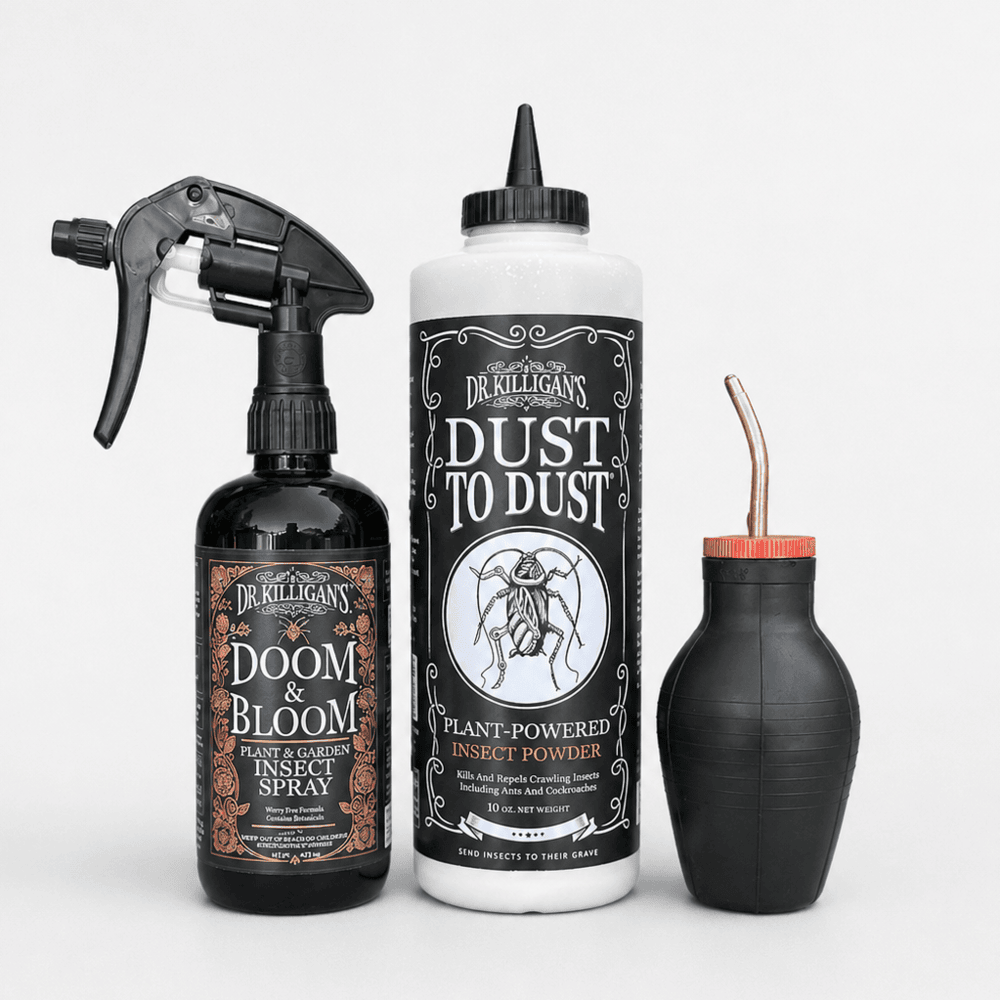
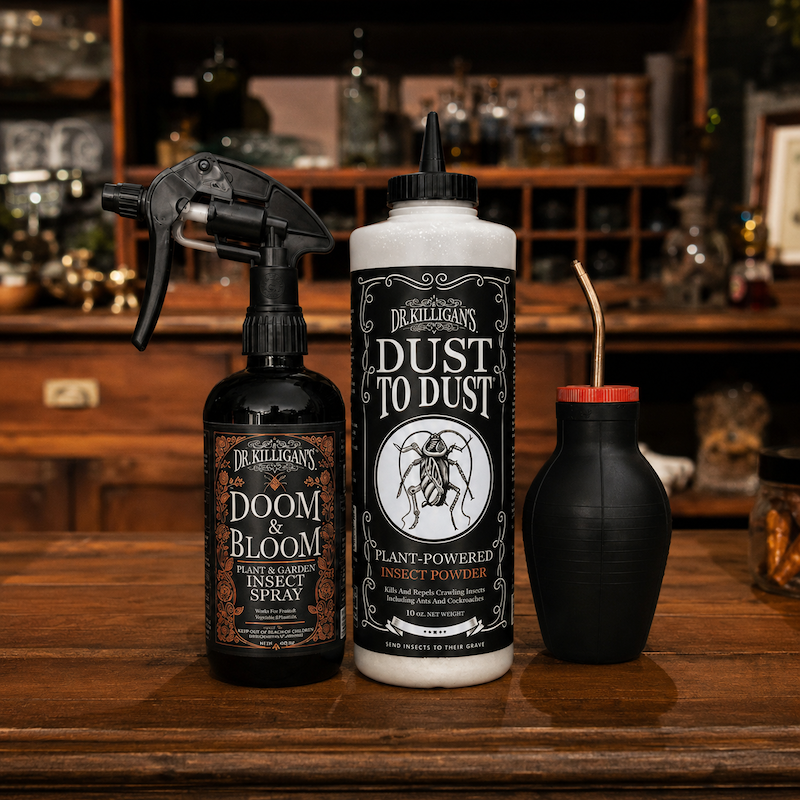
Featured in this article
Shop Dr. Killigan's Essentials


In kitchens, check:
- Under and behind the refrigerator
- Beneath the dishwasher
- Inside garbage cabinet corners
- Under sink plumbing and cabinet floors
- Garbage disposal splash guards and drain lips
In utility rooms, check:
- Floor drains and utility sinks
- Behind the washer and dryer
- Condensation near water heaters or pipes
- Baseboards around old leaks
- Any area that smells faintly sour, musty, or stale
If a room feels inexplicably humid, that is worth following. Phorid flies often lead homeowners to a leak they had not yet noticed.
Step 2: Clean the Source Like It Matters—Because It Does
Once the source is identified, the goal is not a quick wipe. It is removal of the organic film and residue that larvae are living in.
- Scrub drain interiors with a proper brush, not just a liquid rinse.
- Lift and clean around appliance feet where sticky buildup accumulates.
- Wash garbage bins and cabinet floors thoroughly with warm, soapy water.
- Clean utility sink edges and overflow seams where sludge gathers.
- Remove soaked cardboard or liner material that has absorbed old spills.
This is mechanical control in its most practical form. Phorid flies are not particularly loyal; once their nursery is removed, they lose interest.
Step 3: Dry the Area Completely
Moisture is the accomplice in almost every phorid fly problem. Cleaning without drying invites the cycle to continue.
- Repair slow drips beneath sinks and utility lines
- Use a fan or dehumidifier in damp utility rooms
- Replace water-damaged shelf liners
- Let cleaned drains and sink edges dry when possible
- Avoid storing wet mops, sponges, or rags in enclosed spaces
Especially in lower-level laundry or utility rooms, humidity can hover quietly in the background. Drying the environment is often as important as scrubbing the residue itself.
Step 4: Treat This as a Source Problem, Not a Product Problem
Because phorid flies breed in hidden organic buildup, there is no elegant shortcut around removal of the source. That makes this one of those pest problems where restraint is genuinely more useful than overreaction. A homeowner may not need a dramatic fly response so much as a drain brush, a flashlight, a towel, and a willingness to look behind the washing machine.
That said, many households still prefer to build a broader non-toxic prevention system for kitchens, mudrooms, utility areas, and other insect-prone rooms. In that context, a general household support product such as the Six Feet Under Barricade Household Insect Kit may make sense as part of a wider home-maintenance plan, especially for common household insect concerns around thresholds, cracks, and room perimeters.
It is important, though, to be clear: phorid flies are usually solved by eliminating the breeding source. Products can support a clean, prevention-minded household, but they do not replace the central work of cleaning, drying, and correcting the hidden moisture problem that invited the flies in the first place.
For readers building a broader prevention routine, the complete collection offers a useful overview of non-toxic household options. Those focused on broader fly-related household categories may also want to browse the Flies Collection.
Step 5: Be Wary of “Fresh-Smelling” Quick Fixes
Phorid flies tempt people toward fast, broad treatments because the adults are irritatingly visible. But broad room sprays, perfumed drain treatments, and surface-only cleaning often leave the true source untouched.
Public health guidance has long noted that indoor pesticide exposure can occur in residential spaces, especially when products are used repeatedly in enclosed rooms with limited ventilation. Some published research has explored whether frequent household chemical use may be associated with irritation or sensitivity in certain individuals, depending on the ingredients involved, how often they are applied, and what surfaces they settle onto.
Potential risks may include residue lingering on kitchen floors, utility-room surfaces, or lower cabinetry where children and pets spend time. That is one reason many homeowners prefer a more targeted, less theatrical response: remove the breeding material, dry the space, and use non-toxic support where it makes practical sense.
Where the Problem Can Be More Serious
In some homes, phorid flies point to something larger than a dirty drain. If the flies persist after thorough cleaning, a hidden plumbing issue may be involved.
More serious possibilities include:
- Leaks beneath flooring
- Broken drain lines
- Organic buildup in inaccessible wall voids
- Subfloor moisture beneath dishwashers or washing machines
If fly activity continues despite repeated cleaning and drying, the next step may be inspection rather than more product. The goal is not to fight harder. It is to find what has been quietly feeding the problem.
Building a Fly-Resistant Kitchen and Utility Room
Prevention is often simpler than homeowners fear. A few habits make these rooms far less hospitable:
- Clean under appliances on a regular schedule
- Brush drains instead of only rinsing them
- Keep trash bins washed and fully dry
- Check under sinks for soft spots or drips
- Replace damp shelf liners promptly
- Do not store wet cleaning tools in closed cabinets
These are not dramatic habits, which is part of their charm. Domestic peace is usually restored by repetition, not spectacle.
Break the Breeding Cycle—Naturally
Phorid flies thrive where hidden residue and moisture are allowed to linger. With better drain cleaning, drier utility spaces, and a steadier prevention routine, kitchens and laundry areas can return to the calm, clean rhythm they were meant to have.
Exclusive Reader Perk: Use code BUGBLOG at checkout for 15% OFF your order.
Explore Dr. Killigan’s Non-Toxic Essentials
Explore more
-
How to get rid of fruit flies in the kitchen
(Fighting them in the kitchen? Clear the counter, drain, and bin.)