

Published February 27, 2024 • Updated June 3, 2026
Reviewed by Julie Miller, BA in Language Arts, Editorial Lead, Dr. Killigan’s
TL;DR: Pantry moth infestations often persist because the source is still hidden. Beyond flour and grains, pantry moths may breed in pet food, birdseed, spices, damaged packaging and other overlooked areas where eggs and larvae can develop undisturbed. Identifying the source is key to breaking the cycle.
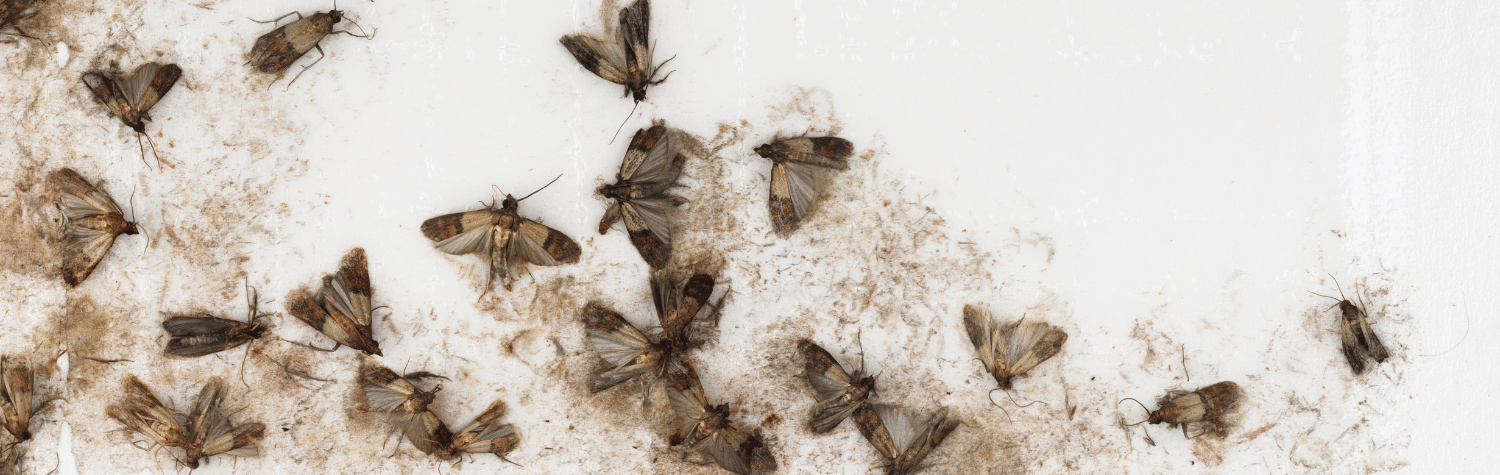
Indian meal moths (Plodia interpunctella)—often referred to as pantry moths, kitchen moths or flour moths—are among the most common stored-product pests found in homes.
One reason they're difficult to track down is that the location where moths are seen isn't always the location where the infestation began. Adult moths may appear on walls, ceilings or around light fixtures, while eggs and larvae remain hidden closer to the original food source.
That source may be far less obvious than an open bag of flour. It could be an old bag of birdseed, a forgotten baking mix, crumbs behind an appliance or a package at the back of the shelf that has not been touched in months.
If you're wondering where pantry moths hide, where they lay eggs or how to find the source of an infestation, this guide highlights seven commonly overlooked hiding places and explains what signs to look for during your inspection.
Where do pantry moths hide?
When searching for the source of a pantry moth infestation, the goal is not necessarily to find the moths themselves. Look for the signs they leave behind: fine webbing, clumped food particles, cast larval skins, feeding damage or small larvae within stored products. These clues can reveal active or previously active areas more reliably than occasional moth sightings.
It's also important to think beyond individual products. Pantry moth activity frequently becomes visible through patterns—multiple affected items on the same shelf, repeated signs appearing in one storage area or evidence concentrated around a particular category of stored goods.
The seven locations below are among the most commonly overlooked places where those inspection clues are found.
1. Behind appliances: Refrigerators, ovens and dishwashers
When pantry moth activity seems disconnected from any obvious pantry item, the answer is sometimes mobility rather than storage. Air currents, vibration and everyday kitchen traffic can gradually move food particles into narrow gaps beside and behind large appliances. Over time, these areas can accumulate a mixture of flour dust, cereal fragments, pet-food particles and other organic material that is difficult to see from normal standing height.
Because these spaces are rarely inspected during routine pantry cleanouts, they can remain untouched even when shelves, containers and cabinets have been thoroughly cleaned. This makes them worth investigating when moth activity continues despite the removal of suspected food sources.
Rather than focusing on the visible floor surface, use a flashlight to inspect appliance edges, wall junctions and recessed areas where debris tends to collect. If food material is present, clean it thoroughly and check the nearby cabinet, pantry shelf or storage area it may have come from.
2. Pet food, birdseed and dried flowers
Not every pantry moth infestation begins inside the kitchen. In many cases, the source enters the home inside a product that already contains eggs or larvae. Pet food, birdseed and dried flowers are particularly important to inspect. Arrangements with seed heads, dried chamomile or dried lavender can contain the kinds of dry plant material pantry moths may investigate.
Unlike pantry staples that are opened, used and replaced regularly, these products may sit undisturbed for weeks or months. As a result, early signs of activity can go unnoticed until adult moths begin appearing elsewhere in the home.
Pay attention to the contents themselves rather than the exterior packaging. Clumping, fine webbing, larvae or unusual debris in the bag, container or arrangement may indicate pantry moth activity. 
3. Spice collections and baking supplies

Some pantry moth infestations persist because the source is rarely used, not because it is hard to reach. Spice jars, specialty flours, baking mixes, seasonal ingredients, backup flour, bulk grains, older rice, seeds and unopened packages can remain in cabinets or overflow storage long after everyday staples have been replaced.
This is especially common in crowded baking or spice cabinets, where small containers, packets and boxes accumulate over time. When inspecting these areas, focus on age and frequency of use rather than package size. Do not assume an unopened package is problem-free.
If activity continues, expand the search to high shelves, secondary pantries, utility closets and anywhere dry goods may have been relocated.
4. Around jar lids and under cans
Many homeowners search for a pantry moth “nest,” expecting to find one concentrated location. In practice, the closest equivalent is often a tiny protected spot where food particles collect and remain undisturbed, such as jar threads, shelf joints, can rims or cabinet corners.
These spots matter because they are easy to miss. Flour dust, spice particles, grain fragments or sticky residue around lids, rims and shelf edges can point to nearby pantry moth activity. Narrow, undisturbed spaces may also give larvae a place to hide or pupate.
Instead of focusing only on the packages themselves, remove jars from shelves, lift cans and inspect edges, corners and joints with a flashlight. If you find residue, webbing or other signs of activity, examine the nearby products more closely.

5. Behind and underneath trash and recycling cans
Sometimes the product that started a pantry moth infestation has already been discarded. In those cases, trash and recycling areas may be the only place left to find traces of it.

Food debris, spilled contents and organic waste may collect behind or beneath bins. When left undisturbed in dark areas, that material can offer larvae a food source, become a breeding site and help pantry moth activity persist after the original item has been thrown away.
Use these areas as investigative checkpoints. Check behind and underneath bins, inspect nearby cardboard or recycling storage and clean away any residue that could support continued activity.
6. In places of comfort: Cushions and beds
Pantry moths are usually tied to stored dry goods, but food debris can carry the trail beyond the pantry. Snack crumbs from crackers, cereal, chips or popcorn can settle into seams, folds and other quiet spots that are not cleaned often.

These areas are easy to overlook because they do not feel like pantry moth territory. They are worth checking when pantry shelves have already been cleaned but adult moths continue to appear elsewhere in the home.
When inspecting, lift cushions, check seams, vacuum under furniture and examine the edges of beds or upholstered pieces.
7. In perforated packages
Small openings in nearby packaging can create access points where pantry moths may detect food, enter the package and lay eggs.
These openings can be easy to miss. Folded seams, loosely sealed bags, torn corners, closure gaps and tiny perforations may all create vulnerabilities. Research on stored-product pests has shown that openings as small as 5 mm can provide moths with access to packaged food.

Packaging material alone does not tell the full story. Pantry moth larvae may chew through some thin plastic, paper or cardboard, but gaps, weak points and existing damage are often the more useful clues.
When inspecting pantry goods, compare neighboring products rather than evaluating each item alone. If one package shows activity, examine nearby containers, boxes and bags on the same shelf. Discard anything with signs of pantry moth activity and move unaffected food into tight-sealing containers.
Where do pantry moths lay eggs?
Pantry moths lay eggs near food sources, usually in protected places that are easy to miss during routine cleaning. The eggs themselves can be difficult to see, so look for the clues that follow them: fine webbing, larvae, clumped food or repeated activity around one product or storage area.
If those signs keep appearing in the same place, you are likely close to the source.
How to find the source of a pantry moth infestation
By this point, you know pantry moth activity can begin in several overlooked places. Start with the strongest signs, then work outward from that area. If the first suspect does not explain the activity, continue through nearby shelves, older products, secondary storage and recently discarded items.
Quick reference checklist: Keeping your home moth-free

Appliances: Inspect behind and beside refrigerators, ovens and dishwashers when moth activity continues after a pantry cleanout. Use a vacuum nozzle to remove hidden food debris.
Pet food and birdseed: Store opened bags in tight-sealing containers. If moths appear away from the pantry, inspect these products closely, especially if they have been sitting undisturbed in a garage, utility room, closet or secondary storage area.
Dried flowers: Store extra dried flowers in tight-sealing containers when possible. If arrangements are on display, inspect seed heads, stems and surrounding surfaces for webbing, larvae or debris. If you suspect pantry moth activity, remove the arrangement, clean the area around it and replace it rather than treating the flowers directly.
Spices and baking supplies: Check rarely used ingredients, seasonal mixes, backup flour and older dry goods. Do not assume unopened packages are problem-free. Date new items before storing them and rotate older products to the front.
Jar lids and under cans: Remove jars and cans from shelves, then clean around threads, rims, shelf edges and cabinet corners where residue can collect.
Trash and recycling cans: Clean behind and underneath bins to remove food debris, spilled contents, packaging residue and organic waste.
Cushions and beds: If snacking happens outside the kitchen, adopt a no-food policy for bedrooms and living rooms when possible. If snacks stay in the routine, vacuum seams, cushions, under furniture and bed edges where crumbs can settle out of sight.
Perforated packages: Inspect seams, corners and closure points before storage. If packaging is torn, punctured or questionable, move unaffected food into tight-sealing containers.
When you’ve found the source
Once the source is found, shift from investigation to control. Remove affected items, clean the surrounding area and use Dr. Killigan’s Pantry Moth Traps to help monitor activity and capture adult male pantry moths when used as directed.
For the full cleanup and prevention plan, follow our guide on how to get rid of and prevent pantry moths.
Explore more
-
How to get rid of and prevent pantry moths
(Found the source? Follow the full cleanup and prevention plan.) -
What do pantry moths eat?
(See which pantry foods and stored goods are most likely to attract activity.) -
How long does it take to get rid of pantry moths?
(Learn what to expect after cleaning, trapping and monitoring.)