
By Natalie Whitcomb, Guest Author
TL;DR: Clover mites often appear on sunny window sills and patio doors in early spring as they migrate from lawns toward warmth. They do not bite or damage structures, but they can become a nuisance indoors. Long-term control relies on exterior sealing, lawn adjustments, and thoughtful non-toxic removal rather than heavy chemical spraying.
There is a particular moment in early spring when the light changes. Windows are opened. Patio doors slide back. Fresh air moves through the house with the optimism of a new season.
And then, on a bright window sill, someone notices what looks like red dust—except the dust moves.
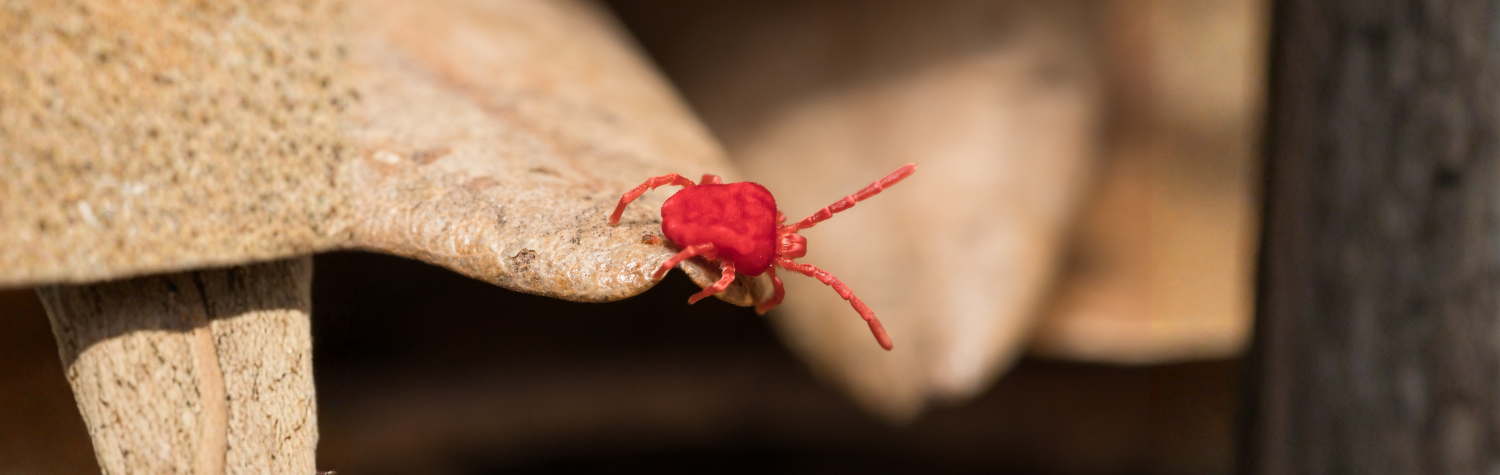
Clover mites are tiny, reddish-brown arachnids that often gather on sun-warmed surfaces in spring. They are not ticks. They do not bite. They do not damage wood or fabrics. But when they appear in numbers along window frames or patio doors, they can test even the most patient homeowner.
The reassuring truth is this: clover mites are a seasonal phenomenon. They are responding to temperature and light, not to your housekeeping.
Why Clover Mites Show Up in Spring
Clover mites live outdoors in lawns and landscaped areas. They feed on grasses and ornamental plants. As temperatures warm in early spring, their populations naturally increase. Sunny days draw them toward heat-reflecting surfaces—foundations, siding, and window frames.
When small gaps exist around windows or door tracks, they slip inside. Indoors, they are often found on:
- South- and west-facing window sills
- Sliding patio door tracks
- Light-colored walls near sun exposure
- Baseboards along exterior-facing rooms
They are drawn to warmth, not crumbs. To light, not laundry.
And while they do not cause structural harm, they leave behind a red smear if crushed—a detail that tends to escalate emotions quickly. (They are tiny, but they do make a statement.)
Step 1: Avoid Crushing Them on Walls
It is instinctive to swipe at small moving insects. With clover mites, that approach can create more cleanup than the mites themselves.
- Use a vacuum with a hose attachment to remove visible mites.
- Empty the vacuum canister promptly.
- Wipe surfaces gently with a damp cloth rather than pressing firmly.
This mechanical removal prevents staining and reduces visible populations without spreading residue.
Featured in this article
Shop Dr. Killigan's Essentials


Step 2: Seal the Exterior Entry Points
The long-term solution begins outside. Clover mites enter through very small openings—gaps around window frames, sliding door tracks, foundation cracks, and utility penetrations.
- Apply exterior-grade caulk around window and door frames.
- Inspect weatherstripping on patio doors.
- Seal foundation cracks near landscaping.
- Ensure door sweeps fit tightly.
Exclusion is more effective than eradication. Once the path is closed, the seasonal surge diminishes significantly the following year.
Homeowners familiar with spring sealing may recognize that these same strategies apply to other invaders. A thoughtful DIY pest prevention approach often reduces seasonal insect activity across the board.
Step 3: Adjust Landscaping Near the Foundation
Clover mites thrive in well-fertilized, lush lawns. Grass planted directly against foundations creates a convenient bridge indoors.
- Create an 18–24 inch plant-free strip along the foundation.
- Use gravel or mulch instead of dense groundcover at the base of exterior walls.
- Avoid over-fertilizing grass near the home.
This buffer zone reduces the likelihood of migration toward siding and window frames.
Think of it as establishing a polite boundary. Even mites respect a little distance.
Step 4: Reinforce the Perimeter with Plant-Based Protection
When clover mites are repeatedly appearing along window frames, siding seams, or patio door thresholds, it often signals that exterior access points need reinforcement. After sealing and landscape adjustments are addressed, a plant-based perimeter approach can provide added support.
The Barricade Household Insect Kit is designed for structured home defense and may be used according to label instructions to help reduce activity around common entry zones. Its targeted, non-toxic approach makes it suitable for households seeking protection without introducing heavy synthetic residues indoors.
Perimeter reinforcement works best alongside exclusion and moisture management. Think of it as strengthening the boundary, not chasing the intruder.
For homeowners developing a comprehensive spring prevention plan, the complete collection offers coordinated tools aligned with thoughtful, non-toxic home care. Additional plant-based options can be explored within the Natural Bug Killers Collection.
Why Many Families Choose Non-Toxic Spring Pest Control
Spring is a season of open windows, barefoot children, and pets lounging in sunbeams. It is also a time when many households reconsider what they apply indoors.
Public health sources have noted that indoor pesticide exposure can occur when sprays are used in enclosed living spaces, particularly along floors and window frames where air circulation may be limited. Some research has explored associations between cumulative household chemical exposure and irritation or sensitivity in certain individuals, depending on ventilation and frequency of use.
Potential considerations may include residue on window sills, door tracks, and surfaces frequently touched by family members.
For this reason, many homeowners prefer mechanical removal, sealing, and plant-based options over routine application of heavier chemicals.
How to Tell Clover Mites from Other Tiny Red Bugs
Clover mites are extremely small—about the size of a poppy seed—with long front legs that extend forward like antennae. They move slowly and tend to gather in sunlit areas.
If small red insects are biting or appearing in bedding, another species may be involved and professional identification is recommended.
In most spring cases, however, clover mites remain confined to window sills and door tracks—and disappear as temperatures shift.
Protect Your Window Sills—Naturally
Thoughtful sealing, landscape adjustments, and targeted plant-based support keep clover mites where they belong—outdoors.
Exclusive Reader Perk: Use code BUGBLOG at checkout for 15% OFF your order.
Get 15% OFF Six Feet Under