

Published November 18, 2024 • Updated November 19, 2025
Reviewed by Julie Miller, BA in Language Arts, Editorial Lead, Dr. Killigan’s
TL;DR: Most ladybugs do not bite, but Asian lady beetles can pinch or bite when searching for moisture or when handled. Native ladybugs may give a light nip with their mandibles, but they cannot break skin and are not dangerous to people, kids or pets. If you feel a sharp pinch from a “ladybug,” it was likely an Asian lady beetle, which is more aggressive and often sneaks indoors in the fall.
A tiny pinch was all it took for me to start wondering. A ladybug landed on my toddler’s arm and she cried “hurt,” then later, one landed on my shoulder and I felt a quick prick before it flew off. I always thought ladybugs were harmless; so why did these encounters sting?
If you’ve asked the same question, you’re not alone. Many people search for answers about ladybug bites because some lookalike species behave differently. The truth is simple: native ladybugs rarely bite, but Asian lady beetles (Harmonia axyridis)—the orange or red lookalikes—will pinch or bite.
Understanding the difference helps you know what you’re dealing with, why the pinch happens and how to keep these beetles out of your home without harsh methods. Let’s break down what actually bites, what doesn’t and how to distinguish the gentle garden helpers from the occasional indoor pest.
Do ladybugs bite?
Yes, but it depends on the species. Native ladybugs—such as the common convergent lady beetle (Hippodamia convergens)—do not bite in the way most people imagine. They do not have teeth and their small mandibles are designed to grip and eat soft-bodied insects like aphids. On skin, those mandibles might feel like a light nip or tickle, but they are not strong enough to break skin or cause bleeding.
Native species can also pinch with their back legs when they feel threatened. This is a simple defense response. The pinch is brief and usually leaves no mark.
Asian lady beetles are different. These are the orange or red lookalikes that often enter homes in the fall. They are more likely to pinch or bite, especially in dry or hot weather.
Which colors of "ladybugs" bite more often?
If you are trying to guess by color, here is a simple guide:
 Convergent lady beetle (Hippodamia convergens)
 Asian lady beetle (Harmonia axyridis)
 Twice-stabbed ladybug (Chilocorus stigma)
Red ladybugs: Most bright red ladybugs you see in gardens, like the Seven-spot ladybug, are native species. They are the least likely to bite and, if they do, it feels more like a light nip.
Orange or yellow ladybugs: Orange to yellow-orange beetles, sometimes with faint or few spots, are often Asian lady beetles. These are the ones most likely to pinch.
Black ladybugs: Black ladybugs are usually native species such as the twice-stabbed lady beetle (Chilocorus stigma). They rarely bite and are not considered harmful.
Color alone does not make a ladybug poisonous or harmful. It mainly helps you tell gentle native ladybugs apart from the more assertive Asian lady beetles that sometimes move indoors.
Why do ladybugs bite or pinch?
When a “ladybug” bites or pinches, it is almost always an Asian lady beetle reacting to its surroundings, not trying to attack. Most of the time, this behavior is about moisture, salt or feeling crowded, not aggression.
Common reasons include:
 Common ladybug (Coccinella septempunctata)
-
Seeking moisture or salt
During dry spells or heat waves, Asian lady beetles may land on sweaty skin to take in moisture or trace nutrients. A small bite or pinch can happen as they test the surface. -
Feeling trapped or handled
When a beetle is picked up, brushed off clothing or pressed against skin, it may pinch with its mandibles or legs as a simple defense. -
Competing for space
Asian lady beetles often gather in large numbers on sunny walls and windows in the fall. In crowded conditions, they can become more reactive and more likely to nip. -
Mistaking skin for a surface to test
Beetles use their mouthparts to explore. A quick “test” bite on skin can happen if they land and do not immediately realize it is not food.
Are ladybug bites dangerous?
For most people, ladybug bites are not dangerous. Pinches from native ladybugs are very mild. Even the sharper bites from Asian lady beetles tend to cause only mild, short-lived irritation.
A typical reaction might look like:
- a small red bump
- slight itching or tenderness
- discomfort that fades within a day or two
What does a ladybug bite look like?
Most of the time, a ladybug pinch leaves little or no trace.
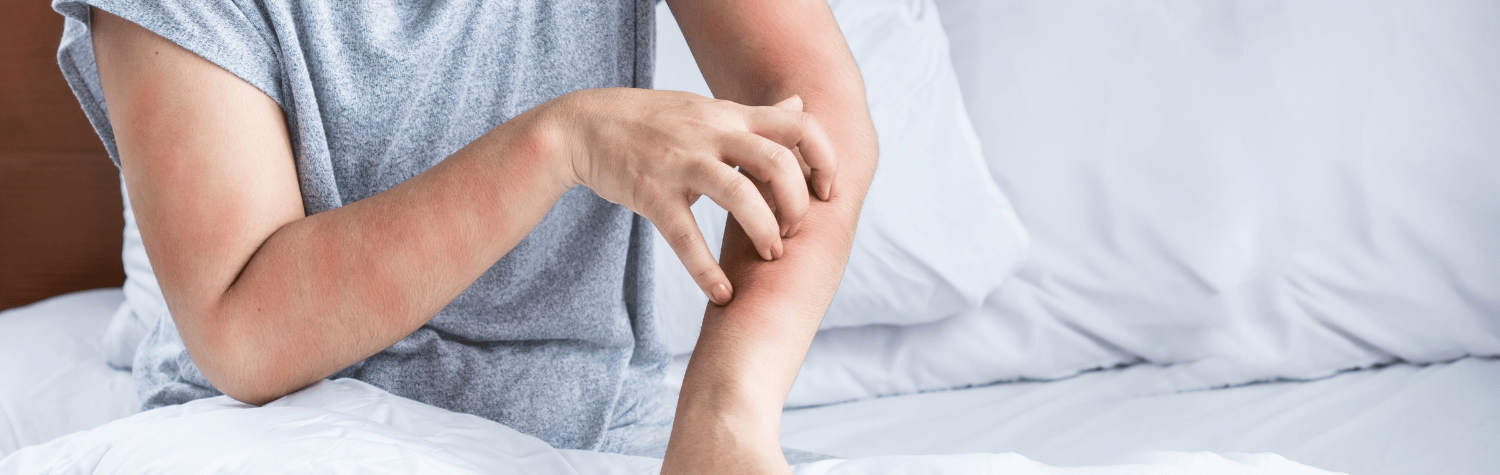
When an Asian lady beetle bites, you may see a small, round red spot at the bite site. It often resembles, or is smaller than, a mosquito bite and may feel tender or itchy for a short time. The area usually settles on its own and does not leave a scar.
Did you know? The mild irritation from a ladybug’s bite often reflects your body’s response to small residues on the beetle’s jaws (or biting parts).
Some people are more sensitive to Asian lady beetles than others. When stressed, these beetles can release a yellowish-orange fluid called hemolymph, which has a strong odor and can irritate skin or eyes. Allergy specialists have noted that this fluid can trigger symptoms like redness, itching or mild respiratory irritation in some individuals. For most people, gently washing the area with soap and water and avoiding scratching is enough to relieve discomfort.
In general, ladybug bites are more of a nuisance than a health threat. The bigger issue is when Asian lady beetles gather indoors in large numbers.
How to tell if it was an Asian lady beetle
If the “ladybug” that bit or pinched you was indoors, orange or unusually bold, it was likely an Asian lady beetle (Harmonia axyridis). Though similar looking, a few key features make these beetles easier to identify once you know what to look for.
1. Color: more orange than red
Native ladybugs are usually bright red. Asian lady beetles range from pale orange to deep orange-red, and some have no spots at all.
If the color looked more orange than the classic red ladybug, that’s a strong clue.
2. “M” or “W” mark
 Asian lady beetle (Harmonia axyridis)
One of the easiest ways to identify an Asian lady beetle is the black “M” or “W” shape on the white area behind its head (called the pronotum).
Native ladybugs do not have this marking.
3. Behavior: bolder
Asian lady beetles are noticeably more assertive than native ladybugs. They may:
- crawl onto skin more often
- pinch when handled
- cluster in groups
- explore food or drink residues
Native ladybugs tend to avoid people and rarely act aggressively.
4. Location: indoors in fall
 Seven-spot ladybird (Coccinella septempunctata)
Asian lady beetles gather on sunny walls, windows and siding in fall as the weather cools. They try to overwinter inside homes and may appear:
- around windowsills
- near ceiling corners
- behind curtains
- in attic spaces or wall voids
If you saw one indoors during fall or winter, it was likely an Asian lady beetle.
5. Likelihood to release fluid
When stressed, Asian lady beetles are far more likely to release hemolymph, the defensive fluid that can stain surfaces. While native ladybugs may do this occasionally, it is much less common.
Are ladybugs dangerous for kids or pets?
Ladybugs are generally safe for kids and pets, and true “nips” from native species are extremely mild. Even Asian lady beetle bites typically cause only mild irritation.
For children, the biggest issue is the surprise. A quick pinch can startle them, but the sensation fades quickly and rarely leaves a mark. Washing the area with mild soap and water is usually sufficient.
Pets may try to eat ladybugs or Asian lady beetles. Swallowing a few is typically harmless, though it can cause mild drooling or stomach upset. Eating a large number can be more irritating because of the yellow-orange defensive fluid, as noted. This fluid tastes bitter and can upset a pet's digestive tract.
How to get ladybugs out of your house naturally
If you’re finding ladybugs or Asian lady beetles indoors—especially in the fall—they are usually trying to overwinter in warm, sheltered spaces. You can encourage them back outside using simple, non-toxic methods.
1. Vacuum and release
Use a vacuum with a hose attachment to collect beetles gently. Empty the contents outdoors, away from doors and siding, so they do not return.
Tip: Place a thin sock over the hose opening and secure it with a rubber band. The beetles collect inside the sock and can be released outside without entering the vacuum canister.

2. Seal gaps and entry points
Asian lady beetles enter through:
- gaps around windows
- attic vents
- door frames
- siding cracks
- utility openings
Seal these areas with caulk or weatherstripping to prevent new beetles from entering.
3. Create a sticky barrier (not a pesticide)
Double-sided tape placed along windowsills or entry points can catch beetles that enter repeatedly. This is a monitoring tool—not a control method—and helps capture small numbers without chemical treatments.
4. Use Dr. Killigan’s products responsibly
If you are sealing up entry points because of Asian lady beetles, chances are other unwanted insects are using the same gaps.
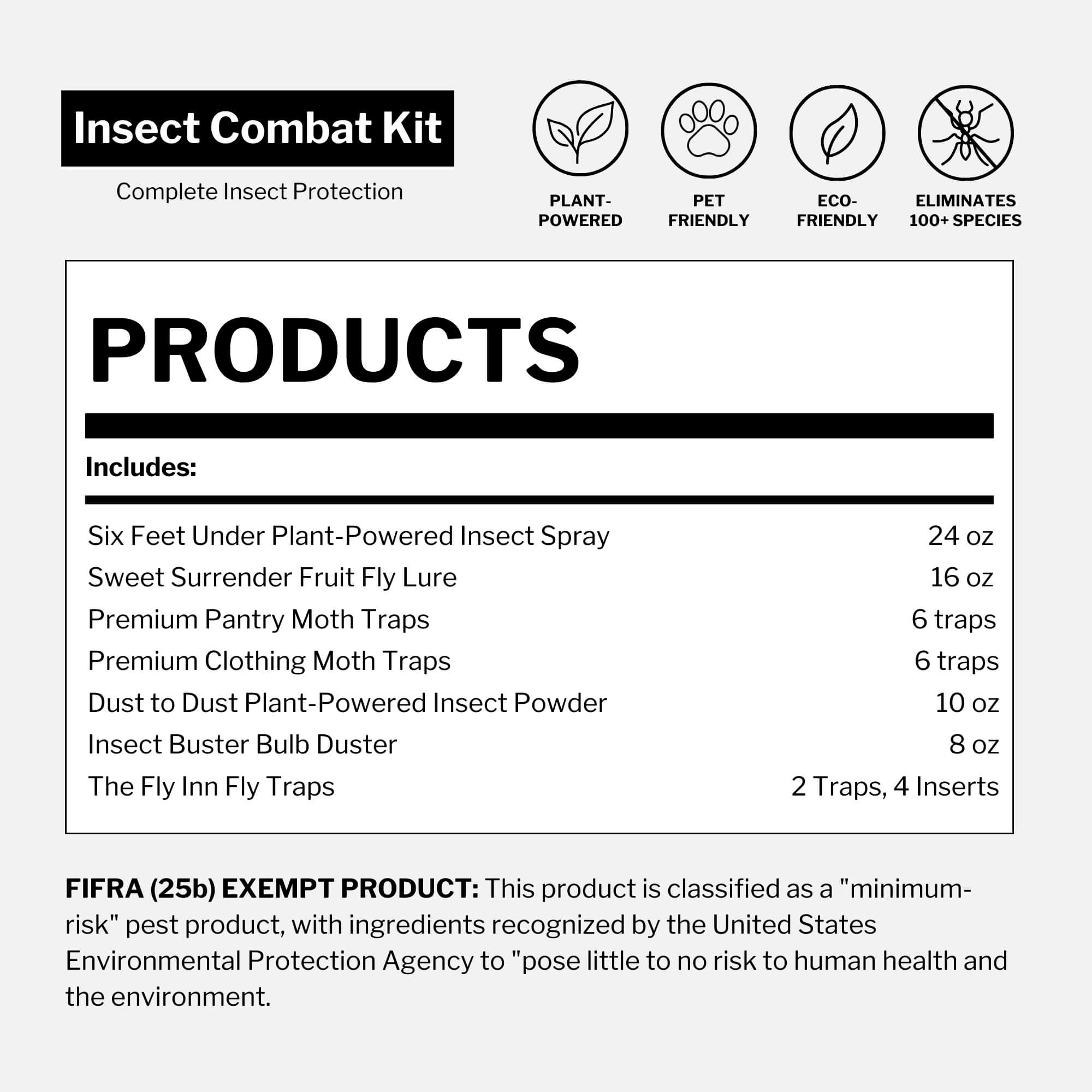
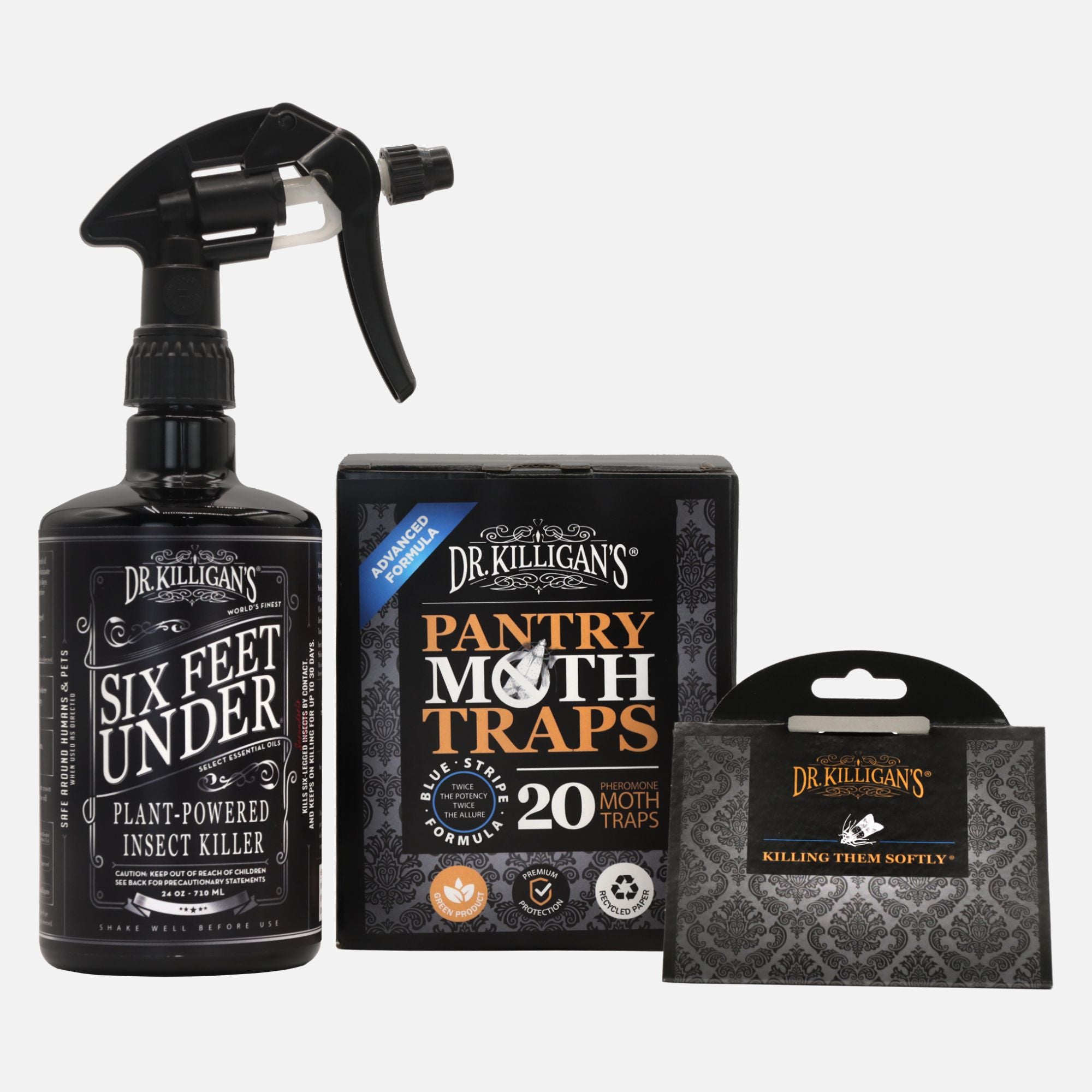
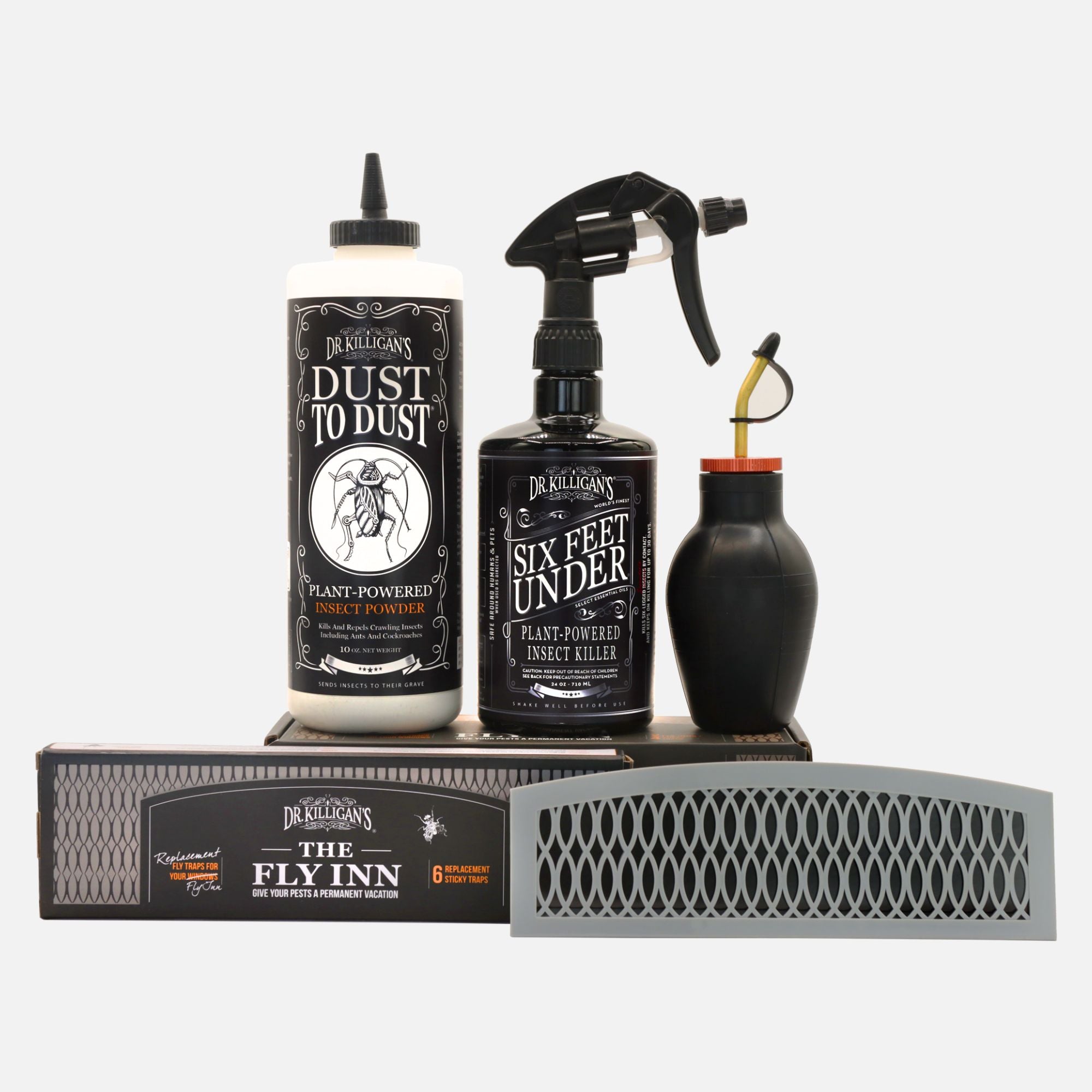
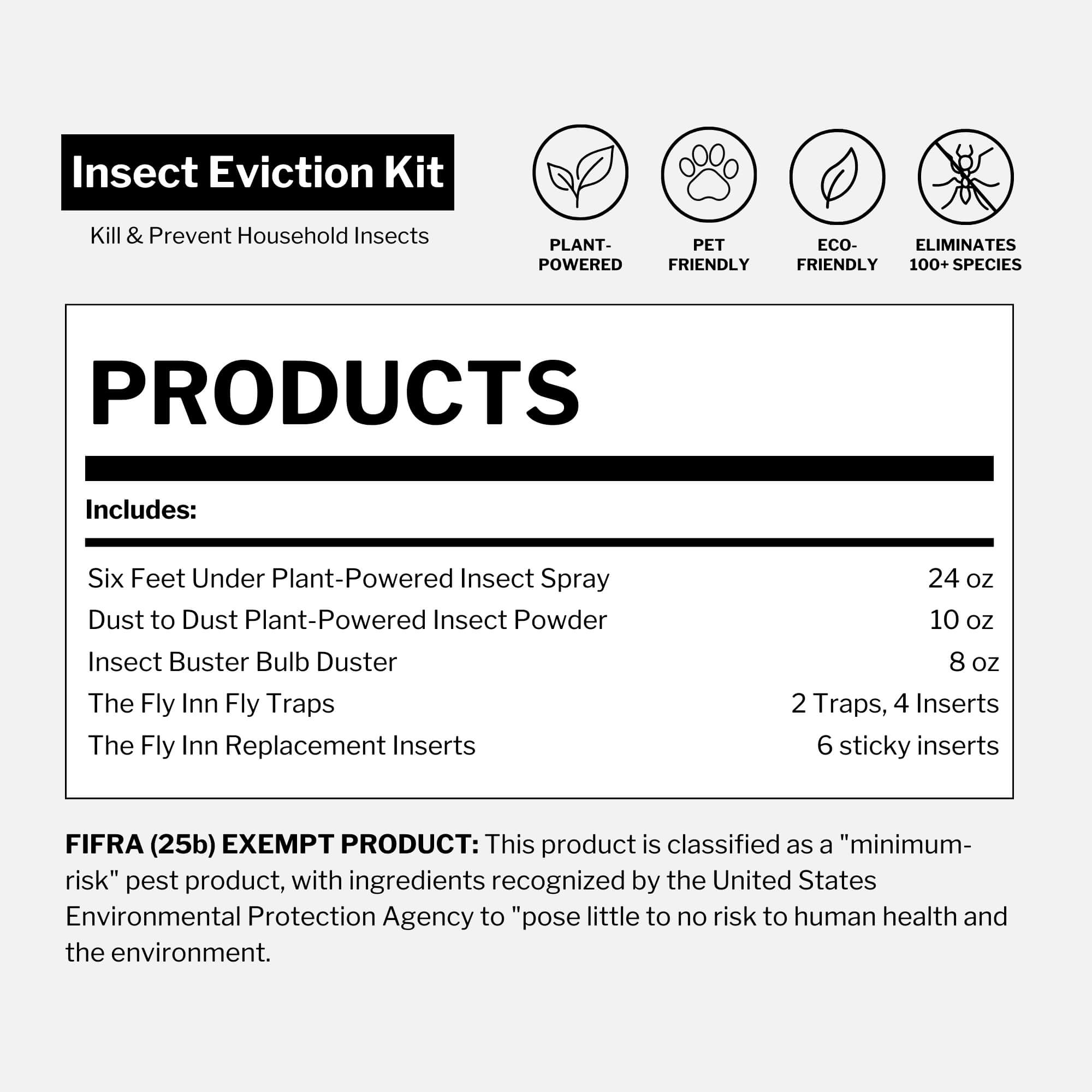
- Six Feet Under Plant-Powered Insect Spray: A clove and cinnamon oil–based spray designed to help you deal with common household insects when used as directed. It works well for spot-treating ants, roaches or other crawling insects that come through doors, baseboards or utility openings.
- Dust to Dust Plant-Powered Insect Powder: A fine, plant-powered powder for cracks and crevices where crawling insects travel. You can apply it around thresholds, wall gaps and utility penetrations to create a long-lasting barrier for pests that move along those routes.
Used this way, these tools help you manage invading household pests and support a non-toxic, prevention-focused approach to home protection.