

Published October 10, 2023 • Updated March 6, 2026
Reviewed by Julie Miller, BA in Language Arts, Editorial Lead, Dr. Killigan’s
TL;DR: Earwigs do not bite humans in the usual sense. They may use the pincers at the end of their bodies to give a mild pinch if disturbed, but this is rare and usually harmless. Most encounters are more startling than painful. Despite the myth, earwigs do not crawl into human ears to lay eggs.
Earwigs belong to the insect order Dermaptera, a small but widespread group with roughly 2,000 known species found on every continent except Antarctica. Though often recognized on sight, they are more unusual than many people realize: earwigs have folded wings beneath short forewings, even though they rarely take flight.
Do earwigs bite?
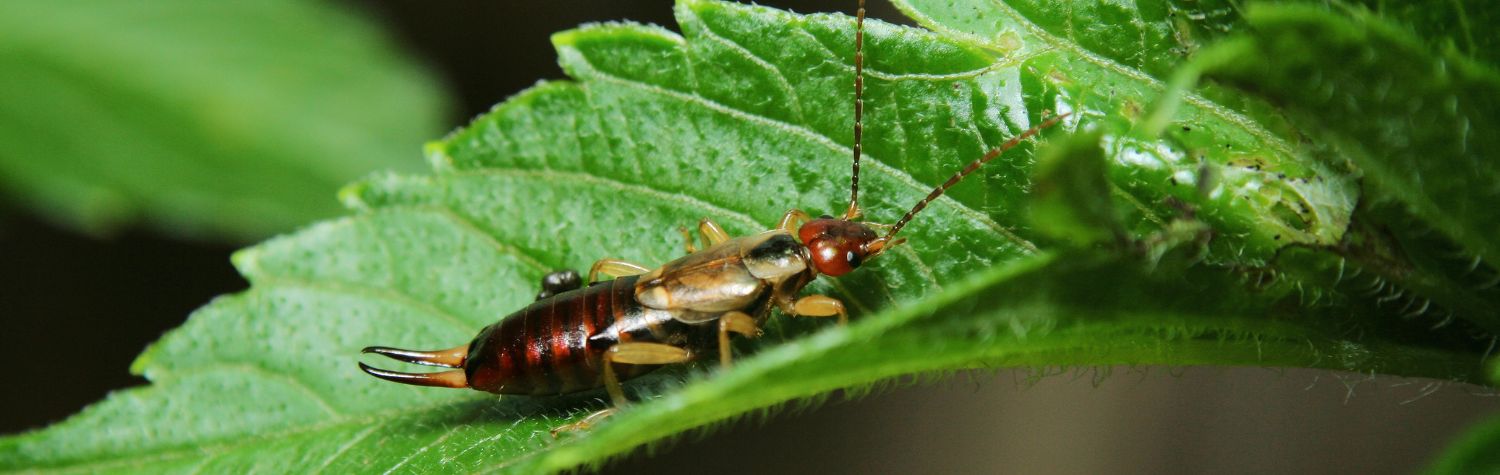
 Earwig (Forficula auricularia)
Earwigs are not known for biting humans. These insects rarely bite people.
Most reports of an “earwig bite” are actually describing something different. At the end of an earwig’s abdomen are small forceps-like appendages called cerci, which is why encounters with them are sometimes mistaken for bites.
Earwigs do have mouthparts, but they use them to feed on plant matter, decaying organic material and small insects. They are not adapted to bite human skin.
Do earwigs pinch?
Yes. Earwigs can pinch if they feel threatened or become trapped against the skin.
The cerci serve several purposes in an earwig’s life. They help the insect defend itself, handle prey and interact with other earwigs. Males often have more curved pincers, while females usually have straighter ones.
When an earwig pinches a person, it is almost always reacting defensively. This may happen if the insect is picked up, trapped against the skin or disturbed while hiding.
Even then, the pinch is typically mild. Earwig pincers are small and rarely break the skin. For most people, the pinch is brief and mild.
What does an earwig pinch look like?
 Earwig pincer
Because earwigs do not truly bite people, visible marks from an encounter are uncommon.
If a pinch does occur, it is usually minor. A small red spot, slight irritation or a faint line may appear where the pincers pressed against the skin. Unlike bites from mosquitoes or fleas, earwig pinches do not cause welts or persistent itching. Any mark usually fades quickly on its own.
Washing the area with soap and water is usually enough.
Are earwigs dangerous?
Earwigs are not considered a dangerous household pest. They can be unpleasant to find indoors, especially in larger numbers, but they are better understood as a nuisance than a serious threat. For most homeowners, the real frustration is where they appear and how suddenly they seem to show up, not the level of harm they pose.
Are earwigs poisonous?
No. Earwigs are not poisonous. Their appearance has inspired more than a few myths, but they do not contain or deliver a poison that makes them dangerous to people.
Do earwigs sting?
No. Earwigs do not sting. They do not have a stinger, so an earwig “sting” is not something these insects can deliver.
Do earwigs crawl into human ears?

No. Earwigs do not seek out human ears.
The name itself helped keep this myth alive. “Earwig” comes from Old English, combining words for “ear” and “insect,” and over time that meaning fed the superstition that these insects crawled into the ears of sleeping people.
Modern entomology does not support that belief. Earwigs do not target human ears and they do not lay eggs there. In the rare event that an insect is found in an ear, it is considered accidental rather than purposeful.
So while the myth has a long history, it is not supported by what we know about earwig behavior.
Why do earwigs come into homes?
Earwigs usually come indoors in search of moisture, shelter and protection from outdoor conditions. While they are primarily outdoor insects, homes can offer the dark, enclosed spaces they prefer.
Damp areas are especially attractive to them. Basements, bathrooms, laundry rooms and crawl spaces often provide the humidity and cover that help earwigs stay protected during the day.
Weather can also push them inside. During hot, dry spells, earwigs may move toward cooler and more humid hiding places. In late summer and early fall, they may also begin seeking sheltered spots as outdoor conditions shift.
Small openings around doors, windows and foundations make that movement easier. Once inside, earwigs usually remain tucked into cracks, crevices and other shaded spaces until nightfall.
How to get rid of earwigs

Getting rid of earwigs starts with changing the conditions that help them settle in. The goal is to make your home less inviting, both indoors and around the exterior.
- Reduce excess moisture in damp rooms and along the home's perimeter
- Seal gaps around doors, windows and the foundation
- Clear away leaves, mulch and other shaded debris near the house
- Address active earwig activity with a targeted product
If earwigs are already showing up indoors, Six Feet Under® offers a plant-powered way to kill visible earwigs on contact. For earwigs hiding in cracks, crevices and other hard-to-reach spaces, Dust to Dust® can help extend control in the places where they tend to linger. For homeowners focused on stopping earwigs before they come inside, Barricade can help create a protective perimeter around the home when used as directed.
Explore more
-
How to get rid of earwigs
(How to reduce moisture, limit hiding places and treat active earwig activity with a more complete plan.) -
Can earwigs cause infestations?
(What a larger earwig presence really means, when to worry and how to keep the problem from growing.) -
Where do earwigs go in winter?
(Why earwigs disappear in colder months, where they shelter and why some still end up indoors.)