

Published February 19, 2025 • Updated May 8, 2026
Reviewed by Julie Miller, BA in Language Arts, Editorial Lead, Dr. Killigan’s
TL;DR: Yes, some cockroaches can fly. German cockroaches have wings but rarely fly and usually run. American cockroaches can fly short distances or glide from high places, while smoky brown and Asian cockroaches are stronger fliers, especially in warm, humid conditions.
Cockroach flight FAQs
Do roaches fly?
Some roaches fly, but most common indoor roaches are more likely to run than fly. Others may only flutter or glide short distances when startled.
Do German cockroaches fly?
German cockroaches rarely fly. They have wings as adults, but indoors they are much more likely to run and hide than take flight.
Do roaches have wings?
Many adult cockroaches have wings, but young cockroaches, called nymphs, do not. Wings also vary by species: German, American, smoky brown, and Asian cockroaches have developed wings as adults, while Oriental cockroaches have shorter or underdeveloped wings.
Do all cockroaches fly?
No. Not all cockroaches fly, and even winged cockroaches do not necessarily fly well. Flight ability depends on the species, wing development and conditions.
Which cockroaches fly?
Among common household roaches, flight ability usually falls into three groups:
Stronger fliers: smoky brown and Asian cockroaches
Short-distance fliers or gliders: American cockroaches
Rare or non-fliers: German and Oriental cockroaches

What types of cockroaches can fly?
Some cockroaches are stronger fliers than others. Here’s how common roach species compare by wing development and flight ability.
Common cockroaches: wings and flight ability
| Cockroach species | Wings present | Can they fly? |
|---|---|---|
| American cockroach | Fully developed wings as adults. | Can fly short distances or glide from high places, though they often prefer to run |
| German cockroach | Fully developed wings as adults. | Rarely flies; more likely to run and hide indoors |
| Oriental cockroach | Males have short wings; females are wingless. | Cannot fly due to underdeveloped or absent wings |
| Smoky brown cockroach | Fully developed wings as adults. | Strong flier, especially outdoors in warm, humid conditions |
| Asian cockroach | Fully developed wings as adults. | Strong flier; often attracted to light at night |
Did you know? Some large roaches, such as the American cockroach, may glide across a room from a high surface. This is more common in warm, humid regions, where winged roaches are more active.
Understanding which species can fly naturally leads to the next question: why do cockroaches take to the air?
What “flying” usually looks like
Cockroach flight depends on the species—and what looks like “flying” is often a quick flutter or glide. Next, we’ll break down wings, flight behavior, and how to keep roaches out.
Do cockroaches have wings?
Most adult cockroaches have wings, but many don’t use them much. Instead, they rely on speed and may flutter or glide briefly when startled.
- Wingless nymphs: Immature cockroaches, called nymphs, are wingless and incapable of flight.
- Adult cockroaches: Their flight muscles are less developed than those of other flying insects, which limits how far they can fly.
Cockroach flight is usually a last resort, used for escape—not sustained travel.
Why do cockroaches fly?
Cockroaches do not fly like birds or butterflies. Their flight is short, erratic and more like gliding than powered flight—similar to a paper airplane. Rather than soaring or hovering, they rely on brief bursts. Here’s why they might take to the air:

- Escape: When threatened, some cockroaches use their wings to escape predators or humans.
- Travel: Cockroaches may fly to cover larger distances quickly when searching for food, water or shelter.
- Mating: In some species, male cockroaches may take short flights or display wing-fluttering to locate or attract mates, especially in warm conditions.
- Environmental triggers: Warm and humid conditions often encourage flying behavior, especially in tropical climates. Cold-blooded, cockroaches thrive between 75°F and 85°F but may fly to escape excessive heat, gliding to cooler areas or descending from high places.
How to identify a flying cockroach
Spotting a cockroach in flight can be startling, but not all airborne cockroaches are true fliers. Here’s how to tell whether you’re seeing a species capable of flight:
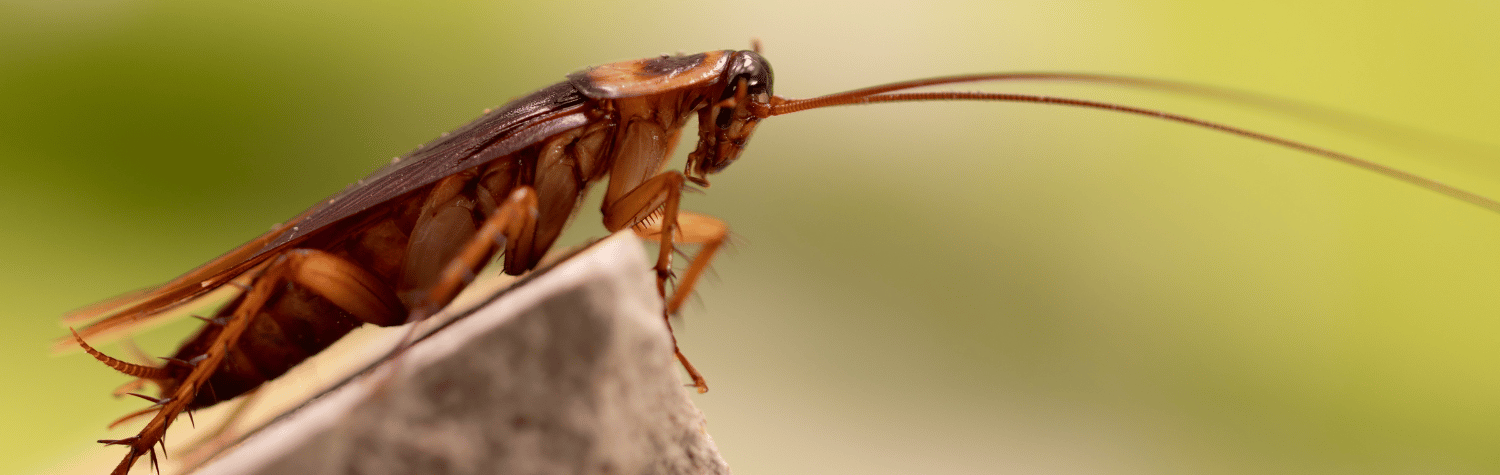
- Look at the wings: Fully developed wings that extend past the abdomen often indicate a species that can fly, even if it doesn't do so often.
- Observe the behavior: If a cockroach glides or flutters briefly when disturbed, it may belong to a flight-capable species—but one that typically relies on short, low bursts rather than true flight.
Note: Flying cockroaches are more common in warm, humid environments or during summer when conditions are ideal.

Note: Earwigs, crickets and some species of beetles are often mistaken for cockroaches.
How to manage flying cockroaches
Flying cockroaches can make infestations even more distressing. Here are steps to manage and prevent them:
- Seal entry points: Use caulk or weather stripping to seal cracks, gaps and openings around doors and windows.
- Eliminate food and water sources: Clean up crumbs, store food in airtight containers and fix leaky pipes to make your home less appealing to cockroaches.
- Reduce moisture: Use dehumidifiers in damp areas and improve ventilation to discourage cockroach activity.
- Use light traps: Light traps can be particularly effective against species that are attracted to light, like the Asian cockroach.
- Apply solutions: Target adult cockroaches and nymphs with Dr. Killigan’s Six Feet Under Plant-Powered Insect Spray, which kills on contact without harmful chemicals. For residual protection, apply Dust to Dust Plant-Powered Insect Powder to cracks, crevices and areas where cockroaches are likely to hide. This plant-powered dust remains effective as long as it is present, providing ongoing defense against infestations.
Tip: For expert advice on eliminating cockroaches, check out How to get rid of cockroaches. For details on specific species, read How to quickly get rid of American and German cockroaches
Conclusion
Yes, some cockroaches can fly—but most don’t. While a few species are strong fliers, most use their wings only to glide short distances or escape danger. Whether you're dealing with fast runners or airborne gliders, knowing which cockroach species are capable of flight is key to effective control.
Their ability to fly adds complexity to infestations, but with the right prevention and treatment strategies, you can keep your home cockroach-free. For a safe and reliable solution, trust Dr. Killigan’s Six Feet Under Plant-Powered Insect Spray and Dust to Dust Plant-Powered Insect Powder. These products offer on-contact and residual protection, helping you reclaim your space from unwanted pests.