

Published January 22, 2024 • Updated July 29, 2026
Reviewed by Julie Miller, BA in Language Arts, Editorial Lead, Dr. Killigan’s
TL;DR: Pantry moth traps use species-specific pheromones to attract and capture adult male pantry moths. They do not catch eggs, larvae or females, so they work best alongside food removal, pantry cleaning and sealed storage.
How well do pantry moth traps really work?
Well—but success does not always look like a mothless pantry overnight.
Pantry moth traps reduce the number of adult males available to mate. This slows the reproductive cycle and makes the infestation easier to control.
The clearest sign that Dr. Killigan’s Premium Pantry Moth Traps are working is the presence of adult male moths on the pheromone-laced glue surface. Those catches confirm that adult male pantry moths are active nearby.
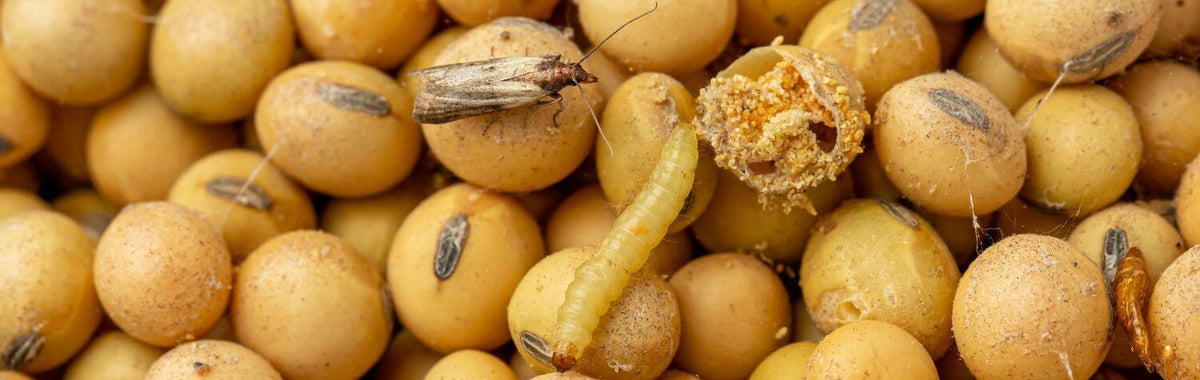
You may still see moths flying after the traps begin collecting them. This is because different stages of the life cycle were already present throughout the pantry, with eggs, larvae and pupae developing at different rates. As they mature, new adult moths emerge in waves rather than all at once.
Continued catches usually mean moth activity remains nearby. They may also point to an infested food source that has not yet been found.
How do pheromone traps for pantry moths work?
Female pantry moths release pheromones to signal that they are ready to mate. Male moths detect those chemical signals with their antennae and follow them toward the source.
Pheromone traps recreate that signal. Dr. Killigan’s Premium Pantry Moth Traps use the Advanced Blue Stripe Formula, a double-potent moth-pheromone attractant, to draw adult males onto the sticky surface.
The pheromone is species-specific, which means the trap must match the moth you are trying to catch. Dr. Killigan’s pantry traps target food-infesting species, including Indian meal moths, almond moths, raisin moths and Mediterranean flour moths.
A clothing moth trap uses a different pheromone and will not provide the same result in a pantry. Correct identification comes first.
For a closer look at which species respond to pantry moth pheromones, see What moths are attracted to pantry moth traps?
What makes the best pantry moth trap?

Once you have confirmed the correct species and pheromone type, compare the features that affect performance, longevity and purchase confidence.
Glue that holds: The adhesive should remain sticky enough to secure captured moths as pantry conditions change. Dr. Killigan’s adhesive is purposefully designed to deliver a strong, lasting hold, including in humid environments.
A clearly stated use period: Look for traps that explain exactly how long they remain effective after opening. Dr. Killigan’s Premium Pantry Moth Traps remain active for three months.
Protected, unopened potency: Individually sealed foil pouches help preserve the pheromone before use. Stored unopened, Dr. Killigan’s traps retain full potency for up to three years from the date of manufacture.
Suitability for food-storage areas: Pantry moth traps should fit naturally into spaces where food is stored. Dr. Killigan’s traps are free of harsh chemicals and safe to use around food, children and pets when used as directed.
A discreet design: A trap should work without becoming an eyesore. Dr. Killigan’s traps are sleek and understated, allowing them to blend into pantry shelves and cupboards.
Buyer protection: A satisfaction guarantee reduces the risk of trying a new product. Every Dr. Killigan’s product is backed by a satisfaction guarantee, with 100% of the purchase price returned if you are not satisfied.
Together, these details help distinguish a well-made pantry moth trap from one that offers little clarity about how it performs, where it can be used or how long it lasts.
Do homemade pantry moth traps work?
Homemade pantry moth traps may catch an occasional moth, but they do not usually match the precision of a species-specific pheromone trap.
A sticky card or household bait can capture an insect that happens to land on it. What it lacks is the targeted chemical signal that draws adult male pantry moths toward the trap.
That distinction matters. Pantry moth pheromones are designed to attract specific food-infesting species. Common DIY ingredients may appeal to other insects, create competing odors or produce little response from the moths you are trying to catch.
Homemade traps also make results harder to interpret. An empty trap may mean the bait is ineffective, the trap is poorly placed or the insects have been misidentified. A species-specific pheromone trap gives you a clearer indication of adult male pantry moth activity.
The better distinction is not homemade versus store-bought. It is untargeted bait versus a pheromone developed for the species you need to catch.
Featured in this article
Shop Dr. Killigan's Essentials


What should you do while pantry moth traps are working?
Treat the trap as one part of an active cleanup—not a reason to pause and wait.
Start by locating the infestation source. Inspect every dry good, including unopened packages, pet food and bird seed. Pantry moth larvae can enter packaging through small gaps or infest products before they reach your home.
Discard anything with webbing, clumped food, larvae or suspicious debris. Do not rely on appearance alone when one package has already shown signs of activity; inspect nearby items individually.

Next, vacuum shelf seams, cabinet corners, peg holes and other narrow spaces where wandering larvae may settle. Empty the vacuum promptly so captured material does not remain inside the home.
Wipe the pantry clean, then move unaffected foods into airtight containers. This removes easy access to food and makes future signs of activity easier to spot.
Maintain this routine until you no longer find new signs of activity in stored food or pantry crevices.
For a deeper explanation of recurring activity, see why pantry moths keep coming back.
For the complete step-by-step process, see the full removal plan.
How many pantry moth traps do you need, and when should you replace them?

The right number of traps depends on the size of the space and where moth activity is concentrated.
Use enough traps to cover each separate food-storage area where you have seen moths or found signs of infestation. A large pantry, garage or bird-seed storage area may need more than one trap, especially when shelves, walls or doorways divide the space.
Place traps where adult moths are most active, while keeping them away from strong drafts that may carry the pheromone away from the problem area. If a trap remains empty while moths are still visible, move it to another nearby location.
Replace each trap after three months or sooner if the glue surface becomes full, dusty or no longer sticky. A heavily covered trap has less exposed adhesive available to capture additional moths.
Do not crowd several traps together in one small area. Spacing them across the affected storage space gives the pheromone a better chance of reaching moths moving through different parts of the room.
For detailed placement guidance, see where to place pantry moth traps.

Related: How to get rid of pantry moths in the kitchen
Explore more
-
Why pantry moths keep coming back (and how to prevent them)
Deeper answers on persistence, food disposal and long-term prevention. -
How to get rid of pantry moths: 8 proven ways
The step-by-step removal checklist for eliminating every life stage. -
Where to place moth traps for pantry and clothing moths
Exactly where to position traps, how many to use and when to move them. -
What moths are attracted to pantry moth traps?
Why species-specific pheromones matter when choosing the right trap.