
Published July 4, 2024 • Updated December 6, 2025
Reviewed by Julie Miller, BA in Language Arts, Editorial Lead, Dr. Killigan’s
TL;DR: Many “silverfish” are actually lookalikes—earwigs, bristletails, firebrats or booklice—so first check color, body shape and whether you see three tail bristles or pincers. Then, no matter which bug it is, lower humidity, fix leaks, declutter paper and cardboard, seal cracks and store dry goods airtight, and use plant-powered sprays and fine insect powders in cracks and crevices to help control activity when used as directed.
If a tiny, fast, wiggling insect darts across your floor, it’s easy to assume it’s a silverfish. But several small insects share the same shape and movement—some lighter, some darker, some with pincers instead of tail bristles. Before you use any treatment, it helps to know exactly which one you’re seeing. This quick guide shows you how to tell silverfish from their most common lookalikes at a glance.
Quick ID: Bugs that look like silverfish

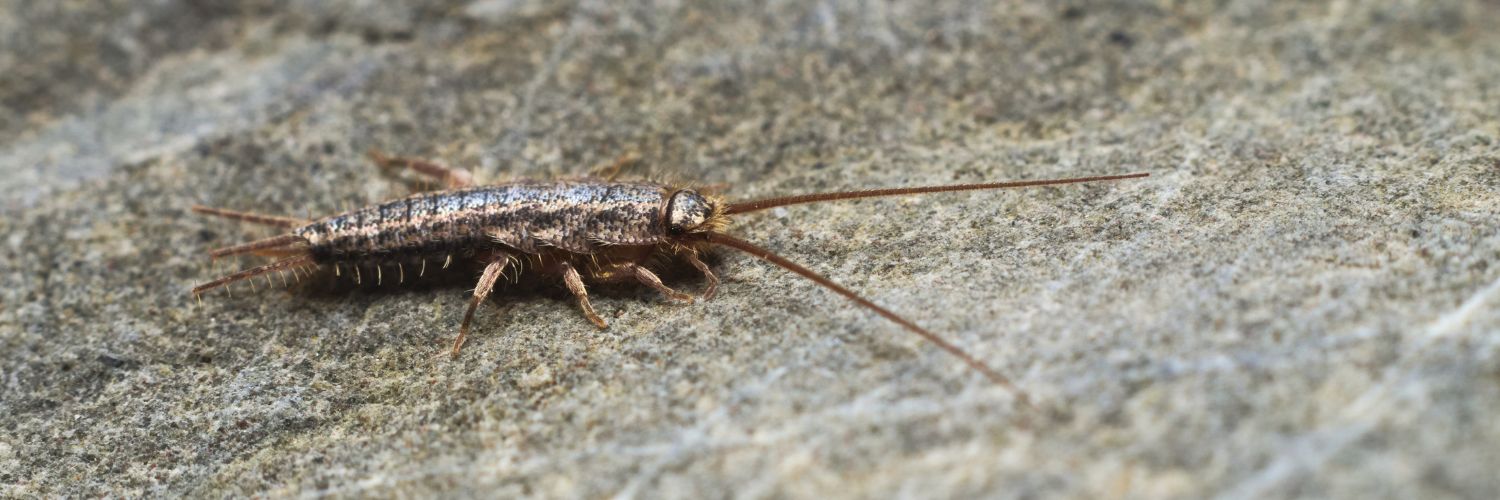
Silverfish (Lepisma saccharina)
Color: Silvery gray
Shape: Flattened, carrot-shaped body
Features: Two long antennae and three tail-like bristles
Movement: Fast, wiggling, almost fish-like

Firebrat (Thermobia domestica)
Color: Mottled gray or brown, often darker than silverfish
Where found: Very warm areas—boiler rooms, near furnaces, water heaters
Features: Similar body with three tail bristles; slightly fuzzier appearance

Southern Bristletail (Dilta hibernica)
Color: Brown or gray
Shape: More tube-shaped and often chunkier than silverfish
Features: Three tail bristles, typically found outdoors in leaf litter, rocks and wood

Earwig (Forficula auricularia)
Color: Brown to almost black
Shape: Narrow, with a harder, shell-like exterior
Features: Two prominent pincers at the back; no tail bristles

Booklice (Liposcelis bostrychophila)
Color: Very pale—white to light tan
Size: Tiny, about 1–2 mm
Features: Soft, oval body with long antennae; no tail bristles; often near books, papers or damp walls
If you see pincers, think earwig. If you see three tail bristles and shimmery scales, you’re almost certainly looking at a silverfish, firebrat or bristletail.
Can silverfish be black or brown?
Silverfish are usually silvery gray, but lighting, age and species can make them look slightly darker. If the insect appears very dark brown or black, or has a hard, shiny shell, it’s often not a silverfish. Dark “silverfish-like” bugs are commonly:
- Firebrats (mottled gray-brown, found near very warm appliances)
- Bristletails (brown or gray, typically outdoors)
- Earwigs (dark, hard-shelled insects with pinchers)
A true silverfish will have a matte, scale-covered body and three tail bristles. A shiny or armored insect—with or without pincers—is almost always a different species.
What are silverfish?
 Silverfish (Lepisma saccharina)
Often called the “silver bug” and belonging to the order Zygentoma, silverfish are fast, agile insects that dart and wiggle across floors, walls and even ceilings. They’re highly adaptable and resilient, able to survive in a range of environments, especially where there’s high humidity and easy access to paper, cardboard or fabric.
Silverfish at a glance
- Appearance: About 13–25 mm long (roughly ½–1 inch). Flattened, carrot-shaped bodies covered in metallic, silver-colored scales that shimmer in the light, with two long antennae and three tail-like bristles.
- Habitat: Prefer dark, humid spaces—typically basements, bathrooms, kitchens, laundry rooms and other areas with poor ventilation or past water damage. These high-humidity areas let silverfish absorb moisture through their skin, so they can survive without needing to drink water directly.
- Diet: Feed on cellulose-based, starchy materials such as paper, wallpaper paste, book bindings, cardboard, some fabrics and even human or pet food when other sources are scarce.
- Are they harmful? Silverfish are considered nuisances rather than dangerous pests. They do not bite, sting or transmit diseases, but they can damage books, papers, wallpaper and stored items over time.
Tip: “Cellulose-based” simply means materials made from plant fibers—like paper, cardboard and many fabrics—which silverfish are well equipped to digest.
What are firebrats?
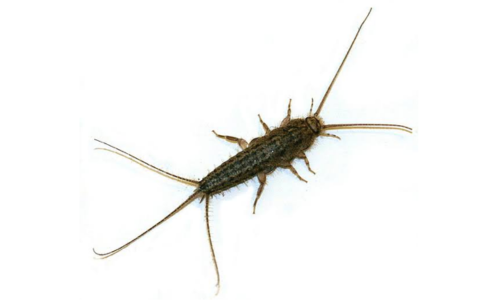 Firebrat (Thermobia domestica)
Firebrats are close cousins of silverfish, also in the order Zygentoma. They move with the same quick, wiggling motion and have a similar flattened body shape, but tend to be darker in color and prefer much hotter areas, especially around appliances and pipes.
Firebrats differ from silverfish in color, appearing in shades of grey or brown, and prefer warmer conditions.
Firebrats at a glance
- Appearance: Slender, elongated, somewhat flattened body, usually mottled gray or brown. They’re typically smaller than common silverfish, about 6–12 mm long (roughly ¼–½ inch) and are covered in fine hairs or scales that give a slightly velvety look. Like silverfish, they have long antennae and three tail-like bristles.
- Habitat: Attracted to very warm, humid spots—such as boiler rooms, around furnaces, ovens, hot water pipes and water heater closets—because they’re prone to desiccation (drying out) in drier environments. They thrive in temperatures around 90–108°F, where silverfish might be less active.
- Diet: Feed on many of the same starchy, cellulose-based materials as silverfish, including cereals, flour, pasta, pet food, paper products and fabrics bound with plant-based adhesives.
- Are they harmful? Firebrats do not bite, sting or transmit diseases. Their main impact is as a nuisance pest, damaging paper goods, stored foods, fabrics and other organic materials when infestations go unchecked.
Note: In heavier infestations, the feces, shed skins and other debris from silverfish, firebrats and bristletails may occasionally trigger allergy-like symptoms in people who are very sensitive to dust or insect allergens. If anyone in your home has a history of severe allergies or asthma, consider using a HEPA-filter vacuum and wearing a dust mask while cleaning infested areas.
What are bristletails?
Bristletails—sometimes called “silverfish with tails” because of their similar shape and coloration—look a lot like silverfish at first glance: long, slender, fast-moving insects with three tail bristles. The key difference is that they are usually outdoor dwellers, found in natural, sheltered places rather than inside homes. They belong to the order Microcoryphia and have been around for millions of years, adapting well to rocky and wooded habitats.
Bristletails at a glance
- Appearance: Brown or gray, with a more tube-shaped, arched body that often looks slightly larger than a typical silverfish, with some species reaching up to about 20 mm (around ¾ inch) in length. Like silverfish and firebrats, they have long antennae and three tail bristles.
- Habitat: Most often found outdoors—in leaf litter, under stones, in decaying wood, bark crevices and other cool, protected areas. They prefer moisture but can tolerate drier conditions and generally don't establish themselves indoors.
- Diet: Feed on decaying plant matter, fungi, algae and other organic debris. Some species may also consume tiny insects or dead arthropods.
- Are they harmful? Bristletails are not harmful to people or pets. They do not bite or transmit diseases and rarely cause any structural or household damage. When spotted indoors, they’re usually accidental wanderers rather than signs of an infestation.
What are earwigs?
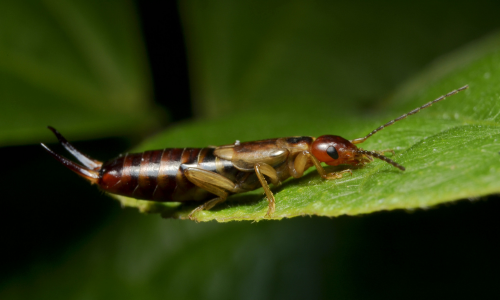 Earwig (Forficula auricularia)
Earwigs are often confused with silverfish because of their long, narrow bodies—but the giveaway is the pair of curved pincers at the end of their abdomen. They belong to the order Dermaptera and have a bit of a dual reputation: outdoors, they can be helpful predators on garden pests like aphids and mites, but indoors they’re mostly a nuisance insect that occasionally wanders in during warm or wet weather.
Earwigs at a glance
- Appearance: Brown to almost black, with a narrow, elongated body and a harder, shell-like exterior. The most recognizable feature is the set of pincers (forceps) at the back. Unlike silverfish, earwigs do not have three tail bristles.
- Habitat: Prefer moist, sheltered places outdoors—mulch, leaf litter, soil, wood piles and foundation gaps. Indoors, they're usually found in bathrooms, kitchens, basements and other areas where moisture is present. They are sensitive to dryness and will seek humidity when possible.
- Diet: Omnivores that feed on decaying plant matter, fungi, small insects (including dead ones) and sometimes household crumbs or pet food if they make their way inside.
- Are they harmful? Despite their intimidating pincers, earwigs are not harmful to people or pets. They do not transmit diseases and their pinch is generally too weak to break human skin. Contrary to popular belief, they are not looking to crawl into human ears. Indoors, they’re simply a nuisance rather than a threat.
What are booklice?
Booklice—tiny insects belonging to the order Psocoptera—are often mistaken for “baby silverfish,” but they’re much smaller, softer-bodied and far more tied to moisture. Despite their name, they aren’t actually lice at all. They’re common in libraries, archives and damp storage areas, and they don’t have the metallic sheen or three tail bristles seen in silverfish, firebrats or bristletails.
Booklice at a glance
- Appearance: Extremely small—only 1–2 mm long. Soft, pale bodies ranging from white to light tan, with a rounded shape and long antennae. No tail bristles. Because of their tiny size and pale color, they are sometimes mistaken for bedbug nymphs, but they behave very differently and do not bite.
- Habitat: Strongly drawn to humidity and microscopic mold. Common in places where moisture meets paper—libraries, archives, bookshelves, cardboard boxes and storage areas. In homes, they are often found in basements, bathrooms and kitchens, or tucked into cracks, crevices and the small spaces between books and papers.
- Diet: Feed primarily on molds, fungi and the starchy glues used in book bindings, but may also nibble on pantry staples like flour or cereal if conditions allow.
- Are they harmful? Booklice do not bite, sting or transmit diseases. Their presence mainly signals excess humidity or early mold growth, rather than posing a risk to people or pets
How to get rid of silverfish—and their lookalikes
Yes. While silverfish, firebrats, bristletails, earwigs and booklice differ in appearance and behavior, the first steps in managing them are remarkably similar.
Where to start
Reduce humidity: Improve ventilation, repair leaks and consider dehumidifiers in basements, bathrooms, kitchens and other damp rooms. Lowering moisture disrupts the conditions that silverfish, firebrats, booklice and earwigs depend on.
Remove food sources: Store dry goods in airtight containers and reduce stacks of paper, cardboard and fabrics that provide shelter and nutrition. Vacuuming along baseboards and bookshelves also helps remove microscopic debris these insects feed on.
Seal cracks and gaps: Caulk wall-floor junctions, plumbing penetrations, gaps behind trim and other narrow spaces where insects travel or hide. This limits movement and reduces places where moisture collects.
Then add gentle, targeted control
Once the environment is less inviting, you can layer in plant-powered solutions to address active insects and intercept the ones still hiding:
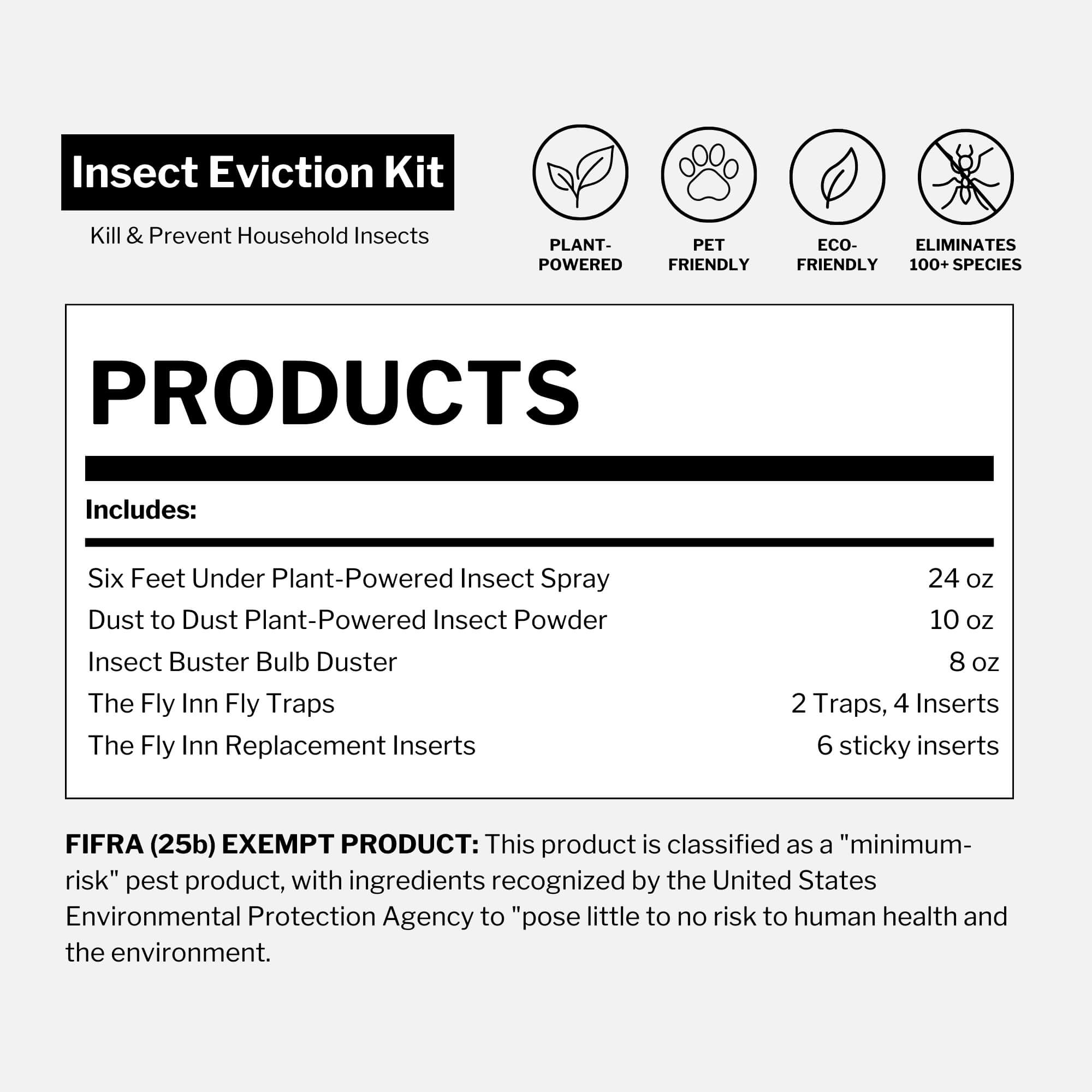
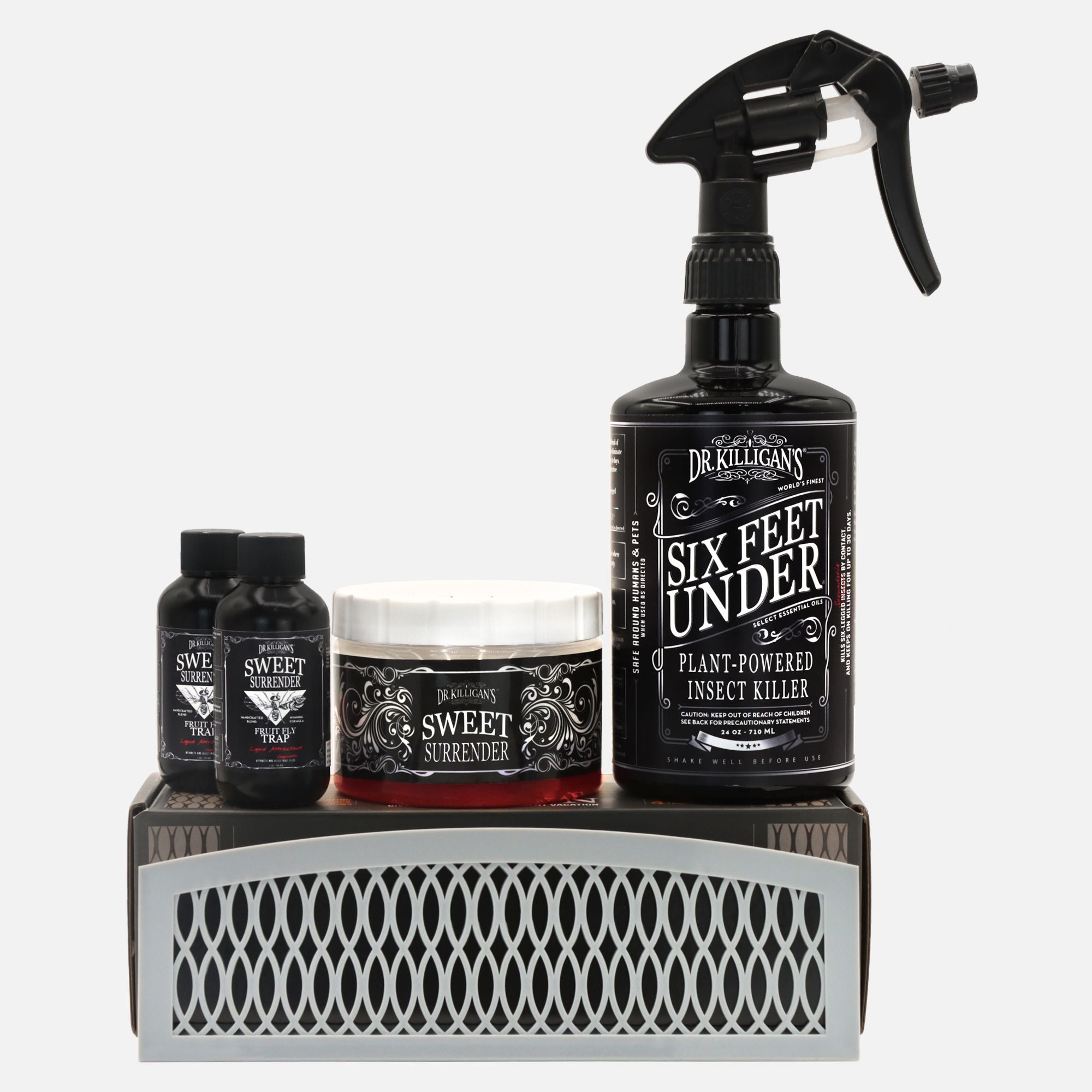
Six Feet Under® Plant-Powered Insect Spray:
Use for contact kill in areas where you see movement—along baseboards, behind appliances and in tight spaces where silverfish, firebrats, earwigs and booklice travel. The formula works quickly on contact and offers a light residual effect on many porous surfaces when used as directed.
Dust to Dust® Plant-Powered Insect Powder:
Apply a thin, almost invisible line of powder in cracks, crevices, wall-floor junctions and other hidden pathways. Dust to Dust has been shown in in-house testing to work faster than diatomaceous earth, and it provides both contact and residual performance in undisturbed areas when used as directed.
Insect Buster® Bulb Duster:
This bulb duster helps you place Dust to Dust precisely where these insects nest or travel—behind trim, along baseboards, in wall voids and under sinks—without making a mess or over-applying product.
This balanced approach—environment first, then targeted plant-powered control—is effective across all the common silverfish lookalikes without over-treating your home.
Why am I seeing silverfish—or their lookalikes—in my home?
If silverfish or their lookalikes are showing up indoors, your home is providing one or more of the conditions they seek: moisture, shelter, warmth or easy access to food. These insects rarely appear without a reason, and their presence is often an early signal of an environmental imbalance.
Moisture problems:
Even small sources of humidity—condensation on pipes, a slow drip under the sink, damp cardboard, or poor airflow—create the microclimates where silverfish, firebrats and booklice thrive.
Warm, undisturbed zones:
Spaces that stay warm or rarely get touched—behind appliances, utility closets, storage rooms, boiler areas—give insects a safe place to hide and reproduce.
Paper- and fabric-based clutter:
Stacks of mail, books, cardboard boxes, stored clothing and old packaging provide both shelter and food. When left untouched, these areas become reliable harborage sites.
Outdoor spillover:
Earwigs and bristletails usually live outdoors. When weather turns hot, dry or stormy, they may wander inside seeking moisture or cooler shelter.
When these elements come together, insects can seem to appear suddenly. Fixing the underlying conditions—especially humidity, clutter and access points—goes farther than any single treatment.